

The way independent boutique owners source inventory has changed more in the last five years than in the previous fifty. Trade shows, multi-day buying trips, fax-back order sheets, and three-month lead times have given way to a new reality where a boutique owner in a small town can wake up, log in to a wholesale platform from their phone, spot a trending style on TikTok, find an identical or comparable wholesale source within minutes, and have those products on their racks in a week.
In 2026, this digital-first wholesale model is no longer a curiosity. It is the default. According to industry data and reporting, dozens of B2B marketplaces have emerged in the past several years to serve boutique buyers, and although a few high-profile platforms (including Tundra, Abound, Bulletin’s standalone marketplace, Shopify’s Handshake, and JuniperMarket) have shut down or pivoted, the overall ecosystem has matured. The remaining players are stronger, better funded, and offer dramatically better tools than they did even two years ago.
This guide walks through how today’s boutique owners are actually finding trending inventory online in 2026. It covers the leading platforms (with a focus on FashionGo and Faire, the two giants of U.S. boutique wholesale), the trend-spotting tools that are reshaping how buyers decide what to stock, and a practical strategy for using these platforms together to build a smarter, more profitable boutique.

Two big shifts define how boutiques source inventory today.
The first is speed. Five years ago, a boutique owner who spotted a viral style on Instagram in February might launch it in their store in June. Today, with the right wholesale platforms in place, that same boutique can have the product live in their shop in days, not months. Live streaming, AI image search, ready-to-ship inventory programs, and direct vendor messaging have collapsed the gap between trend discovery and trend execution.
The second is risk management. Wholesale used to mean betting big upfront. You placed a six-pack minimum order with a vendor, paid in advance, and crossed your fingers. Modern platforms have changed this calculus dramatically through low or no minimum order quantities, net payment terms that let you sell before you pay, free returns on opening orders from new brands, and real-time data on what is actually selling well across the marketplace. A boutique owner in 2026 can place small test orders, see how customers respond, and reorder aggressively only on proven winners.
Both shifts favor independent retailers. The big-box stores still have scale advantages, but small boutiques now have access to data, payment flexibility, and trend response speed that simply did not exist for them a decade ago.
For boutiques whose business is primarily apparel, accessories, footwear, and women’s fashion, FashionGo has become one of the most important platforms to know in 2026. Run by NHN Global, Inc., FashionGo has been dedicated to online wholesale fashion for more than 15 years, with deep roots in the Los Angeles fashion district. The platform connects retailers and boutiques with over 1,400 vendors and access to millions of styles.
Several things make FashionGo particularly strong for trend-focused boutique buying:
Trend analytics and best-seller data. FashionGo’s analytics pull from millions of transactions across the platform, and the platform highlights real-time best-seller velocity and trending styles. This is one of the most useful purchasing tools available to a small boutique. Instead of guessing whether a style will sell, you can see how it is moving across thousands of other boutiques on the platform. Industry coverage has noted that FashionGo’s “what’s hot” lists often surface breakout pieces before they go viral on social media, giving alert buyers a head start.
AI-powered image search. FashionGo offers an image search tool where you can upload a photo (something you saw on Instagram, on a competitor’s website, or on a customer in your store) and instantly get matched with similar styles from across millions of items on the platform. For trend chasing, this is a game changer compared to typing keyword searches.
Live streaming with brands. Vendors on FashionGo run live streams where retailers can watch new arrivals and best sellers, ask questions in real time, and see how the products actually look in motion. This gives boutique owners more confidence in their orders and recreates some of the energy of an in-person buying showroom.
Dynamic Net Terms. FashionGo offers flexible net terms with options for 30, 45, or 60 day payment windows, provided in partnership with Balance Payments. According to FashionGo’s official information, the program has no associated fees and no current late fees, although that policy is subject to change. Your credit limit can grow with each successful payment. For cash-flow-sensitive boutique owners, this is a meaningful working capital tool.
FG Free Shipping. Free shipping on orders of $100 or more from accessories and jewelry vendors, and on orders of $300 or more from apparel vendors, with no subscriptions, no hidden fees, and no commitments. Across many small orders per month, this savings compounds significantly.
FG Pay for secure payment. FashionGo’s payment system runs on Stripe with PCI Level 1 compliance, and card data is tokenized rather than stored on FashionGo’s servers. This means you can place orders across many different vendors with a single secure checkout.
FashionGo Week. Twice a year, FashionGo runs a virtual trade show event. The 2026 spring/summer edition ran from January 12 to 16, 2026 (per the platform’s own published announcement). These events typically feature exclusive promotions, new vendor launches, and concentrated buying opportunities.

Free retailer registration. Joining FashionGo as a retailer is free. You only need to provide your business information and a copy of your seller’s permit (which may be called a Sales Tax Permit or similar depending on your state). Retailers who do not upload a permit may see restricted vendor and style access on the platform, but you can sign up first and add the permit later to unlock full visibility.
A boutique owner who is serious about apparel and accessory sourcing will find that FashionGo is one of the most efficient ways to spot trends, place orders, manage cash flow, and reduce shipping costs all in one place.
If FashionGo is the dominant force for fashion-forward apparel boutiques, Faire has become the most prominent name in broader independent retail wholesale, especially for boutiques whose mix includes apparel plus gifts, home decor, jewelry, paper goods, food, candles, and lifestyle products.
Faire was founded in 2017 and has grown into the leading marketplace for independent brands and boutique retailers. According to recent industry reporting, the platform now serves over 100,000 brands and 700,000+ retailers globally, with strong coverage in the U.S., Canada, the U.K., and Europe. Faire announced in 2026 that the platform has facilitated over 10 million new connections between brands and retailers.
Key Faire features boutique owners are using in 2026:
Net 60 payment terms. Faire offers eligible retailers 60-day payment terms, letting boutiques stock inventory now and pay up to two months later. This is one of Faire’s signature features and a primary reason boutique owners describe Faire as “rewriting the rules of wholesale.”
Free returns on opening orders. This is a particularly buyer-friendly feature: when you place a first order from a new brand on Faire, returns are free. That dramatically reduces the risk of trying an unfamiliar vendor. If the product does not resonate with your customers, you can return it without losing your investment.
Curated, vetted brands. Faire brands must apply and be approved before they can sell, meaning the marketplace has a more curated feel than a fully open platform. For boutique owners who value brand storytelling and unique products, this curation matters.
Faire Top Shop program. In 2026, Faire announced its Spring 2026 cohort of the Top Shop program, recognizing brands that consistently deliver for independent retailers. According to Faire’s official communications, over 5,000 brands were recognized in this quarter’s cohort. The program highlights trust signals like ratings, reorder rates, and fulfillment reliability, helping buyers cut through the noise.
Ready to Ship. Faire’s Ready to Ship feature lets retailers buy inventory that ships immediately, reducing lead-time stress when you need to react to a trend quickly or restock a hot item before a peak weekend.
Faire Direct (for brands). Brands can use Faire Direct links to send their existing wholesale customers to their Faire storefront at 0% commission to the brand. For boutique owners, this means many existing direct vendor relationships now flow through Faire’s order management and payment infrastructure, simplifying back-office work.
Multi-category breadth. Apparel, jewelry, home decor, candles, soap, food, drink, pet products, and paper. For boutiques whose mix is broader than fashion, this breadth is hard to match elsewhere.
Shopify integration. Faire integrates with Shopify, so retailers running their store on Shopify can sync inventory and orders automatically.
Faire and FashionGo are not really direct competitors in the strictest sense. They overlap, but they are strongest in different lanes. Most successful boutique owners in 2026 use both, treating FashionGo as their fashion engine and Faire as their broader independent-brand discovery platform.
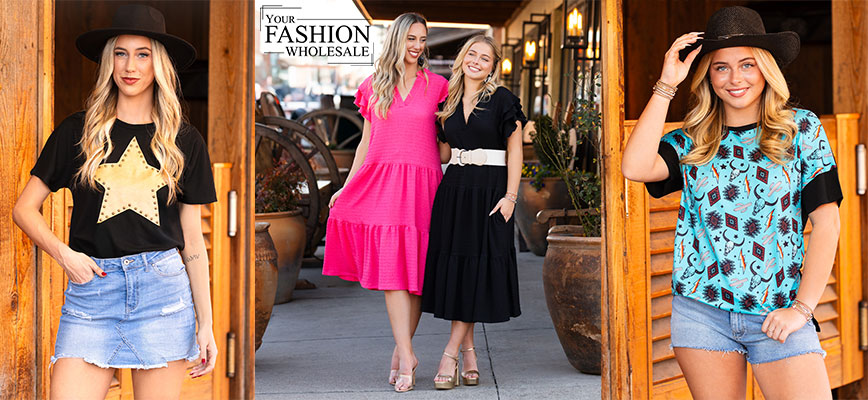
Beyond FashionGo and Faire, the U.S. wholesale ecosystem includes several other notable platforms boutique owners are using strategically:
LA Showroom. Often considered FashionGo’s closest direct competitor on the apparel side, LA Showroom is also rooted in the Los Angeles fashion district and offers a large catalog of wholesale clothing and accessories. The platform features tiered memberships, a visual match tool for finding similar styles from an inspiration image, downloadable lifestyle photography for retailer marketing, and bilingual customer support. Registration typically requires a business license, seller’s permit, and proof of business activity.
Bloom Wholesale. A Los Angeles-based supplier that sources primarily from downtown LA factories. Bloom is a strong option for boutiques that want “Made in USA” tags without ultra-premium pricing. It is more of a single-vendor wholesale supplier than a marketplace, but it is widely used by independent boutiques alongside marketplaces like FashionGo.
Wholesale Fashion Trends. Another LA-based premium clothing and accessories wholesaler with more than 1,000 items on its site, free shipping on U.S. orders over $300 and a flat $9.95 rate under that threshold. Often used by new boutique owners as a starting point before exploring larger marketplaces.
Orangeshine. Sometimes described as “the little brother to FashionGo,” Orangeshine is a U.S. wholesale apparel marketplace that has built a reputation with LA-based manufacturers. It offers a clean layout and competitive commission structure, though it does not currently offer consolidated shipping the way it once did.
Brandboom Marketplace. A wholesale platform that works well for both men’s and women’s fashion. Brandboom requires verified buyers to see all items from every brand and offers end-to-end order management, making it useful for boutiques that want a more controlled, professional buying environment.
Bulletin. Originally launched in 2015 as a curated wholesale marketplace with physical retail pop-ups in New York City, Bulletin was acquired by Emerald Holding (parent company of the NY NOW trade show) in 2022. Today, Bulletin operates as the digital marketplace integrated with NY NOW events, smaller and more niche than Faire but well regarded for design-forward, women-owned, and diverse-owned brands.
JOOR. A higher-end fashion B2B platform used more by premium and luxury boutiques and brands, especially those connected to fashion week and the international wholesale calendar. Less relevant for everyday boutique sourcing but important to know for premium retailers.
Creoate. A newer European-focused wholesale marketplace that is growing rapidly. Mostly relevant for U.S. boutiques importing from European brands, but worth knowing if you are looking to differentiate your assortment.
Some platforms that boutique owners may remember from earlier years (Tundra, the standalone Abound marketplace, Shopify Handshake, and JuniperMarket) have closed or pivoted over the past three years. The lesson the industry has learned is that wholesale marketplaces are not permanent, and smart boutique owners diversify across more than one platform rather than depending entirely on a single source.

Finding trending inventory in 2026 is no longer about traveling to trade shows and guessing what will work. It is about combining several signals in real time. Here is how successful boutique owners are doing it:
Social media trend monitoring. TikTok, Instagram Reels, and Pinterest are the leading edge of consumer fashion trends. Smart boutique owners save inspiration content during the week, then use FashionGo’s AI image search or LA Showroom’s visual match tool to find wholesale equivalents quickly. The cycle from “saw it on TikTok” to “live in my store” can now be measured in days.
Marketplace best-seller dashboards. FashionGo offers real-time insights into best sellers and trending styles, and Faire’s algorithm surfaces brands and products that are gaining traction with similar retailers. Both signals help boutique owners stock proven winners rather than untested guesses.
Live streams and vendor events. Watching live streams from favorite vendors, especially during big buying events like FashionGo Week, gives boutique owners early access to new collections and exclusive promotions.
Customer behavior data from your own POS. The best boutique buyers triangulate marketplace data with their own sales history. If your customers buy a lot of midi dresses, you weight your trend exploration toward that category. Modern POS systems and Shopify analytics make this kind of decision-making accessible to even small boutiques.
Trade show attendance, selectively. In-person events still matter, but they have shifted from being the only source of inventory discovery to being one input among many. NY NOW, MAGIC in Las Vegas, and Source Fashion remain important for premium and specialty buying, but their role has changed. Many boutique owners attend one or two shows a year for inspiration and relationship building, then do most of their actual ordering on platforms like FashionGo and Faire.
Vendor relationships and Faire Direct. Faire Direct lets brands invite their existing wholesale customers to order through Faire at 0% commission to the brand, which often means better pricing or terms for the buyer. Cultivating a few strong direct vendor relationships still pays dividends.
The single most common strategy among successful boutique owners in 2026 is to use FashionGo and Faire together rather than choosing between them. Here is a practical framework:
Use FashionGo for fashion-forward, trend-driven inventory. Apparel, accessories, footwear, and women’s fashion are where FashionGo excels. Use it when you need to react to a trend quickly, when you want best-seller data, when you want to stock at competitive wholesale prices, and when you want to take advantage of Dynamic Net Terms with up to 60-day payment windows and free shipping on orders over the published thresholds.
Use Faire for unique, brand-rich, multi-category inventory. Use Faire when you want to discover smaller indie brands, when you are stocking gifts, home decor, candles, jewelry, or lifestyle products, and when you want the safety net of free returns on opening orders from new brands.
Use both for net terms diversification. FashionGo’s Dynamic Net Terms and Faire’s Net 60 are separate credit lines effectively. Spreading purchases across both expands your total available working capital and protects you from being overexposed to any single platform’s credit decisions.
Test new brands using free returns where available. When you are unsure about a new brand, prefer placing the opening order on Faire (where opening order returns are free) or use a small test order on FashionGo before committing to a larger reorder.
Run secondary platforms for niche needs. Use LA Showroom or Brandboom Marketplace when you want fashion options beyond FashionGo, Bulletin when you want curated NY NOW-style design-forward brands, and direct vendor relationships for your signature products that you can rely on every season.
This kind of layered strategy is exactly what the strongest independent boutiques are doing in 2026. It gives you the speed of FashionGo, the breadth of Faire, and the differentiation of carefully chosen niche partners and direct relationships.
One of the most consequential shifts in the past few years is how platforms now extend credit to retail buyers. This has changed the math for boutique owners more than almost any other feature.
On FashionGo, Dynamic Net Terms provides 30, 45, or 60 day payment windows, with no program fees and currently no late fees, and credit limits that grow as you make on-time payments. There are clear rules about overdue invoices, holds, and reapplication windows if you are not initially approved, but the program is fundamentally designed to help retailers grow their inventory without tying up cash upfront.
On Faire, Net 60 terms are extended to eligible retailers, meaning you can stock inventory today and pay 60 days later. Notably, Faire pays brands within 1-2 business days of fulfillment, even though buyers get 60 days to pay. That means brands do not have to chase invoices, which makes them more willing to extend wholesale offers to new boutiques. The free returns on opening orders, combined with Net 60 terms, removes a substantial amount of the upfront risk for boutique owners testing new brands.
Combined across both platforms, a well-organized boutique owner can carry meaningful inventory while preserving cash on hand for marketing, payroll, rent, and unexpected expenses. This is genuinely new territory for small retailers.
Even with great tools, boutique owners make some predictable mistakes when sourcing online. The most common ones in 2026 include:
Putting all your eggs in one basket. The closures of Tundra, Abound, Bulletin’s standalone marketplace, Handshake, and JuniperMarket in recent years are a reminder that wholesale marketplaces can change rapidly. Diversify across at least two platforms (typically FashionGo plus Faire) and maintain a small number of direct vendor relationships.
Chasing the lowest possible unit price at the cost of cash flow. Sometimes the cheapest option requires huge MOQs and upfront payment, which can drain your working capital and force you into discounting. Often, paying slightly more per unit on a platform with Net 60 terms and free returns yields better total profitability.
Not using free returns on first orders strategically. On Faire, the free returns benefit on opening orders from new brands is a powerful risk-reduction tool. Use it. Place small test orders from promising new brands, see what sells, then reorder only the winners.
Ignoring shipping math. Hitting FashionGo’s free shipping thresholds ($100 for accessories and jewelry, $300 for apparel) can save hundreds of dollars over a year. Batch your orders strategically rather than placing many small ones.
Skipping the data. Both FashionGo and Faire offer trend and best-seller data that most boutique owners under-use. Spend ten minutes scanning the trending styles section before placing a meaningful order. Your win rate on inventory bets will improve.
Confusing curated and open marketplaces. Faire is more curated and Net 60 friendly but has higher prices in some cases because of brand commissions. FashionGo is more open-vendor and price-competitive, especially for women’s fast fashion. Knowing which marketplace fits which need keeps your assortment strong and your margins healthy.
The big picture in 2026 is that independent boutiques have more tools, better data, and more flexibility than ever before. Cash flow programs like FashionGo’s Dynamic Net Terms and Faire’s Net 60 have given small retailers working capital options that used to require bank loans. Trend tools like AI image search, real-time best-seller dashboards, and live streaming have closed the gap between what big retailers know and what indie boutiques can learn. Curated platforms like Faire and discovery-focused programs like Faire’s Top Shop have made it easier to find unique brands that differentiate a boutique from larger chains.
The smartest move a boutique owner can make right now is to set up accounts on the major platforms, get the necessary documentation in order, apply for net terms where eligible, and start using the trend and data tools systematically. The platforms are doing real work for you behind the scenes; you just need to be set up to use them.
If you are reading this and you are not yet using these platforms to their full potential, here is a clean starter plan you can execute in a single week:
Day 1 to 2. Sign up for FashionGo as a retailer using your seller’s permit. Browse the best-seller dashboard and the trending section to understand what is moving on the platform.
Day 3. Sign up for Faire as a retailer with your business information and a website or social presence showing you sell products. Apply for Net 60 terms.
Day 4. Apply for FashionGo’s Dynamic Net Terms through your account dashboard. Even if you are not approved at the highest tier initially, get the application in.
Day 5. Place small test orders on both platforms. On FashionGo, target a $100+ accessories order or $300+ apparel order to take advantage of FG Free Shipping. On Faire, focus on a new brand whose opening order returns will be free if it does not work out.
Day 6. Add the FashionGo image search to your trend monitoring routine. Save inspiration images during the week and use the image search to find wholesale matches every Friday.
Day 7. Mark the next FashionGo Week dates on your calendar and plan to attend the virtual event for exclusive promotions and new vendor launches. Set a recurring weekly time for trend research on both platforms.
Within two months, this kind of disciplined sourcing approach will dramatically change the quality and freshness of your boutique’s assortment. You will be reacting to trends faster, taking less inventory risk, preserving more cash, and curating a more distinctive store than you ever could using older sourcing methods.
The 2026 boutique inventory landscape is fundamentally different from the one most retailers came up in. The brands and platforms that dominate today (FashionGo for fashion, Faire for broader independent retail, with strong supporting roles for LA Showroom, Bloom Wholesale, Brandboom Marketplace, Bulletin, and a handful of direct vendor relationships) collectively offer a level of speed, flexibility, and intelligence that simply was not possible for a small retailer in earlier eras.
FashionGo brings deep fashion expertise, real-time trend data, AI image search, live streams, Dynamic Net Terms, and free shipping to apparel and accessory buyers. Faire brings curated brand discovery, Net 60 payment terms, free returns on opening orders, the Top Shop trust program, and broad multi-category reach. Together, they form the backbone of how the most successful independent boutiques in the United States are sourcing trending inventory online in 2026.
If you run a boutique and you are not yet using both platforms strategically alongside a small set of supporting tools, you are leaving real money, real time, and real competitive advantage on the table. The good news is that signing up is free, the tools are genuinely good, and the learning curve is shorter than ever. The boutiques that win in 2026 are the ones that treat online wholesale not as a backup sourcing channel but as their primary engine for finding the next thing their customer is going to love.