


Privacy compliance has become an essential part of running any website. Whether you operate a travel blog, an online store, a SaaS platform, or a business website, visitors increasingly expect transparency about how their personal information is collected and used. At the same time, regulations such as the GDPR, CCPA/CPRA, and other privacy laws require many websites to provide clear privacy notices and, in some cases, obtain consent before setting certain cookies.
Because of these growing requirements, many website owners rely on privacy compliance platforms instead of trying to manage everything manually. Two names that frequently appear in this space are Termly and CookieYes.
Both tools help businesses improve privacy compliance, but they are designed with slightly different strengths and approaches. If you’re trying to decide which platform deserves a place on your website, understanding the differences can save time, reduce compliance headaches, and help you choose a solution that matches your long-term needs.
In this guide, we’ll compare Termly and CookieYes across multiple categories, including ease of use, compliance features, policy generation, cookie consent management, integrations, pricing considerations, customer support, and overall value.

Many website owners still think privacy compliance only affects large corporations. In reality, even small blogs and startups often collect personal information without realizing it.
Examples include:
Contact forms
Newsletter subscriptions
Analytics tools
Advertising pixels
Embedded YouTube videos
Social media widgets
Live chat software
E-commerce checkout pages
Most of these tools process some level of visitor information.
Privacy regulations don’t prohibit collecting data—they generally require transparency and, depending on the jurisdiction, proper consent before certain processing activities take place.
Ignoring these requirements may expose businesses to legal risks, reduce visitor trust, or create problems when expanding into international markets.
This is why privacy compliance software has become an important investment rather than an optional extra.

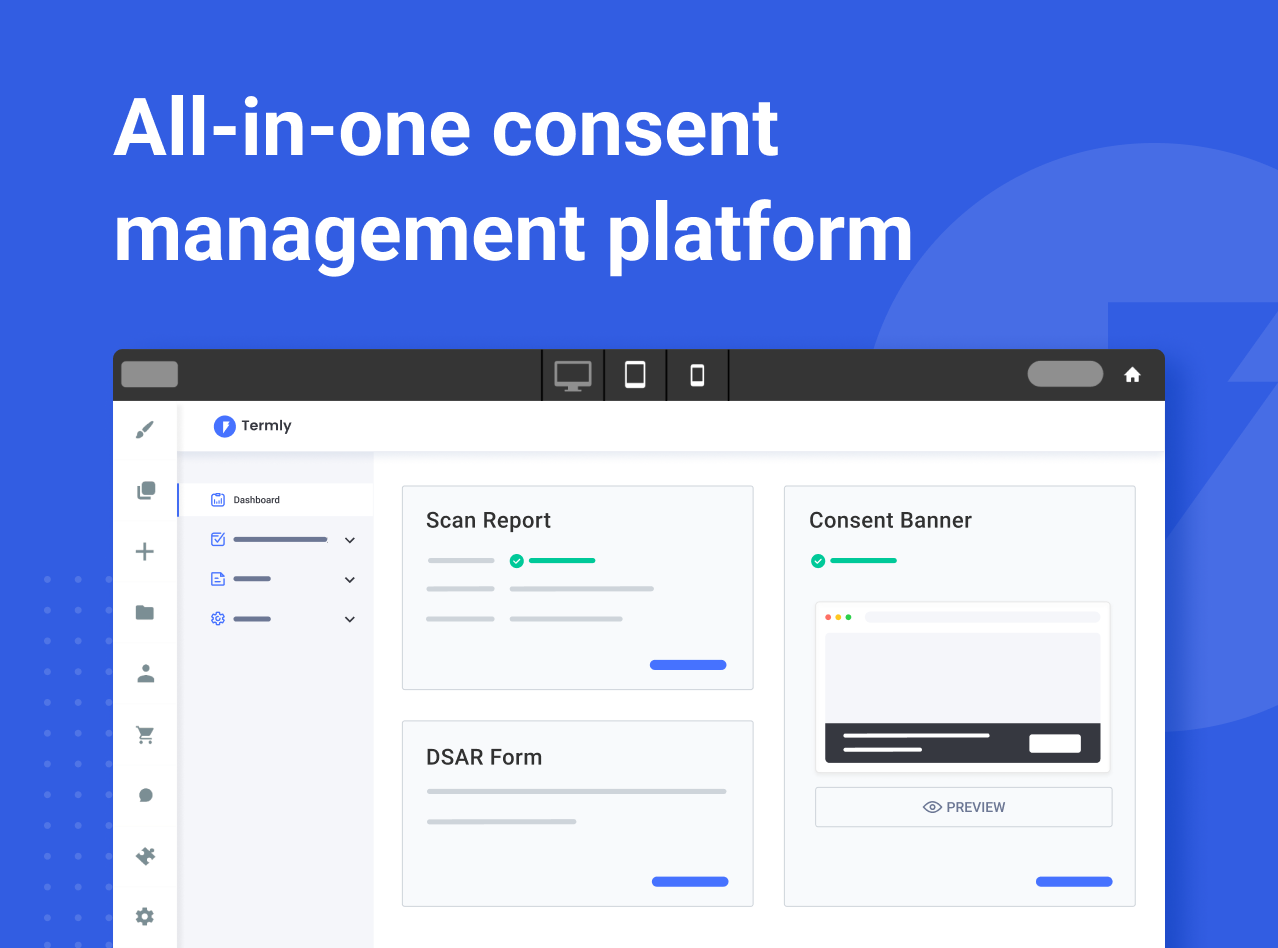
Termly is an all-in-one privacy compliance platform designed to help businesses create legal policies, manage cookie consent, and support compliance with multiple privacy regulations.
Rather than focusing on only one aspect of compliance, Termly combines several tools into one platform.
Some of its primary features include:
Privacy Policy generator
Cookie Policy generator
Terms and Conditions generator
Disclaimer generator
Cookie Consent Manager
Cookie scanner
Consent management features
Policy hosting
Automatic cookie policy updates after scans
This broader approach appeals to website owners who want one platform to manage multiple compliance responsibilities instead of relying on several separate services.

CookieYes focuses primarily on cookie consent management and cookie compliance.
Its platform helps websites:
Scan cookies
Categorize cookies
Display cookie consent banners
Record visitor consent
Manage user cookie preferences
CookieYes also offers policy generation for some legal documents, although cookie compliance remains the core focus of the platform.
For businesses whose primary concern is implementing cookie consent, CookieYes provides tools specifically built around that objective.
One of the biggest differences between these platforms is their overall philosophy.
CookieYes is largely centered around cookies.
Termly, on the other hand, approaches privacy compliance more broadly.
If your website only needs a cookie banner today, both platforms may appear similar.
However, as websites grow, many owners discover they also need:
Privacy policies
Terms and Conditions
Disclaimers
Data request management
Compliance documentation
Having these tools under one platform can simplify ongoing compliance management.

Most website owners aren’t lawyers.
They simply want a straightforward way to improve compliance without reading hundreds of pages of legal documentation.
This is where user experience becomes particularly important.
Termly is designed with guided workflows that walk users through questions about their website before generating legal documents and privacy settings.
Instead of asking users to understand legal terminology, the platform presents understandable questions that translate into customized policy language.
This makes onboarding accessible for beginners while still providing flexibility for businesses with more complex requirements.
CookieYes also offers a relatively simple onboarding process, particularly for cookie banner implementation.
Users typically scan their websites, review detected cookies, customize the consent banner, and publish it.
If cookie consent is your only objective, the process remains fairly straightforward.
Cookie scanning is one of the most important features of any privacy platform.
Websites often use dozens—or even hundreds—of cookies without owners realizing it.
These may originate from:
Analytics services
Advertising platforms
Embedded videos
Payment providers
Social plugins
Marketing tools
Both Termly and CookieYes include cookie scanning functionality.
These scans help identify cookies currently operating on a website so they can be documented within cookie policies and categorized appropriately.
Regular scanning also becomes important because websites change over time.
Adding new plugins or third-party services may introduce additional cookies that require disclosure.
Maintaining an updated inventory supports better transparency for visitors.
A privacy policy is one of the first legal documents many businesses need.
Writing one manually can be difficult because every website collects information differently.
Instead of using generic templates copied from other websites—which may not accurately describe your own practices—many businesses prefer automated policy generators.
This is one area where Termly stands out.
Its Privacy Policy Generator asks questions about your business, website activities, data collection practices, and third-party services before producing a customized policy.
Because the questionnaire is tailored to your specific website, the resulting document can better reflect how your business actually handles information.
CookieYes also offers privacy policy generation features, but privacy documentation is not its primary focus compared to its cookie compliance offerings.
For businesses looking for a broader compliance solution, this distinction may influence the decision.
Cookie banners are often the first thing visitors notice.
An intrusive or poorly designed banner can negatively affect user experience.
Both platforms allow customization options, including:
Banner colors
Fonts
Button labels
Positioning
Consent language
Branding
Customization helps websites maintain visual consistency while still communicating privacy choices clearly.
A banner should look like a natural extension of the website rather than an unrelated popup.
Good customization also contributes to accessibility by improving readability and ensuring visitors can easily understand available choices.

Privacy regulations continue evolving around the world.
Businesses increasingly need to consider requirements from multiple jurisdictions rather than focusing on only one law.
Termly is designed to support compliance efforts across multiple privacy frameworks through its policy generators and consent management tools.
Depending on your business activities and audience, this broader approach can be valuable if your website serves visitors from different regions.
CookieYes also supports cookie consent requirements associated with various privacy regulations, particularly where cookie consent mechanisms are required.
The specific compliance needs of each business will ultimately depend on where visitors are located and which laws apply.
Many website owners underestimate how many legal documents eventually become necessary.
As a business grows, it may require:
Privacy Policy
Cookie Policy
Terms and Conditions
Disclaimer
Return Policy
Additional legal notices
Managing these documents across different services can become time-consuming.
One advantage of using a platform like Termly is having multiple policy generators available within the same ecosystem.
Instead of maintaining separate subscriptions or editing multiple templates manually, businesses can organize much of their privacy documentation from a single dashboard.
This centralized approach becomes increasingly useful as websites expand their services or enter new markets.
A cookie consent banner does much more than simply display a notification. For many websites, it serves as an important part of their overall privacy compliance strategy by giving visitors information about cookies and, where required by applicable laws, options to manage their consent preferences.
Both Termly and CookieYes provide cookie consent management tools, but the overall experience differs depending on what you’re looking for.
CookieYes has built much of its platform around cookie consent. It offers cookie scanning, cookie categorization, consent logging, and customizable consent banners. For businesses whose primary objective is deploying a cookie banner and managing visitor preferences, CookieYes provides a focused experience.
Termly also offers a Cookie Consent Manager as part of its broader compliance platform. Instead of existing as a standalone cookie tool, it works alongside Termly’s legal policy generators and privacy resources. This integrated approach can simplify website management because cookie consent and legal documentation are maintained within the same platform.
For businesses planning long-term growth, having these related compliance features connected together may reduce administrative work over time.
A cookie banner alone isn’t enough for many websites.
Visitors also expect to find a clear Cookie Policy explaining:
What cookies are used
Why cookies are used
Which categories of cookies exist
Whether third parties place cookies
How users can manage cookie preferences
Keeping this document updated manually can become difficult, especially if your website frequently adds new plugins, marketing tools, or analytics platforms.
Termly includes a Cookie Policy Generator that works alongside its cookie scanning capabilities. After scans detect cookies on your website, the cookie policy can be updated to reflect the current information.
CookieYes also provides cookie policy generation alongside its cookie management features, helping website owners document detected cookies in an organized format.
Regardless of which platform you choose, automated cookie documentation is generally more reliable than maintaining a manually written cookie list that may quickly become outdated.
One area where the comparison becomes more noticeable is the availability of additional legal documents.
Many businesses eventually need documents beyond a Privacy Policy and Cookie Policy.
Examples include:
Terms and Conditions
Website Disclaimer
End User License Agreements (where applicable)
Return and Refund policies for online stores
Additional disclosures depending on the business model
Termly provides several legal policy generators within its platform. This makes it appealing for businesses that prefer keeping their legal documentation together instead of relying on multiple services.
For example, a travel website that earns revenue through affiliate marketing may need:
A Privacy Policy
Cookie Policy
Disclaimer
Terms and Conditions
Rather than sourcing each document separately, having these generators in one dashboard can make updates more convenient.
CookieYes offers legal documentation features as well, but its strongest emphasis remains cookie compliance.

The quality of a dashboard can significantly influence day-to-day usability.
Privacy compliance is not something most website owners want to spend hours managing.
A clean dashboard should make it easy to:
Monitor website status
Review cookie scans
Edit policies
Update banners
View consent records
Manage domains
Termly offers a modern interface that organizes compliance tools into logical sections. Since multiple legal documents and cookie management tools exist within one account, users can switch between them without moving to different services.
CookieYes also provides a user-friendly interface centered around cookie management, making it easy to review scans and customize consent settings.
Both platforms are designed for non-technical users, reducing the learning curve compared with implementing privacy solutions manually.
Another important consideration is how easily a privacy platform integrates with your website.
Most website owners prefer solutions that require minimal coding.
Termly supports integration with many common website platforms, allowing businesses to install its privacy tools without extensive technical knowledge.
CookieYes also supports integration with popular content management systems and website builders, making cookie banner deployment relatively straightforward.
For WordPress users, both services offer options that simplify implementation compared with manually editing website code.
Businesses using Shopify, Wix, Squarespace, Webflow, or custom-built websites should review the latest integration documentation from each provider to determine which setup best fits their environment.
Websites rarely stay static.
Every time you install:
A new analytics platform
Marketing software
Advertising scripts
Social sharing widgets
Live chat software
Video embeds
…new cookies may be introduced.
If those cookies aren’t reflected in your Cookie Policy, your documentation can become outdated.
This is why automatic or recurring cookie scans are valuable.
Instead of requiring manual audits every few weeks, automated scans help identify newly added cookies so website owners can review and update their documentation when necessary.
Both Termly and CookieYes provide cookie scanning capabilities designed to simplify this process.
For busy website owners, automation helps reduce the likelihood of overlooking changes introduced through routine website updates.
Not every privacy platform serves the exact same audience.
Some are designed primarily for large enterprises with dedicated legal teams.
Others focus on helping freelancers, bloggers, startups, and small businesses.
Termly appeals to a broad range of users, including:
Bloggers
Affiliate marketers
Small businesses
Agencies
SaaS companies
Ecommerce stores
Growing businesses
Its combination of legal policy generators and cookie management tools makes it suitable for organizations that expect their compliance needs to grow over time.
CookieYes is also used by businesses of different sizes, particularly organizations seeking cookie consent management without necessarily requiring an extensive suite of legal document generators.
The better choice depends largely on how comprehensive your privacy management needs are.
Many agencies and experienced website owners manage several domains simultaneously.
Examples include:
Marketing agencies
Freelance developers
SEO consultants
Affiliate marketers
Publishers with multiple niche websites
Managing privacy compliance across multiple websites becomes easier when the platform provides centralized administration.
Termly allows users to manage compliance resources for multiple websites through its platform, making it practical for businesses operating more than one online property.
CookieYes also supports multiple websites depending on the selected plan.
Before choosing either platform, businesses managing numerous domains should compare plan limitations, supported domains, and administrative features to ensure they meet current and future requirements.
Privacy compliance isn’t a one-time project.
Laws evolve.
Cookies change.
Businesses introduce new services.
Marketing platforms update their tracking technologies.
Because of this, ongoing maintenance often matters more than initial setup.
A platform that simplifies updates can save considerable time throughout the year.
Termly’s integrated approach—combining policy generation, cookie scanning, consent management, and legal documentation—helps reduce the need to juggle several separate tools.
Instead of updating one service for cookie consent and another for privacy policies, website owners can manage many compliance tasks within one ecosystem.
CookieYes remains highly effective for organizations primarily concerned with cookie compliance and consent management.
The decision comes down to whether your business prefers a focused cookie solution or a broader compliance platform.
Even easy-to-use software occasionally raises questions.
Whether you’re implementing your first cookie banner or updating your Privacy Policy, having access to helpful documentation can make the process much smoother.
Termly provides a comprehensive knowledge base with articles covering topics such as:
Privacy laws
Cookie compliance
Legal policy generators
Consent management
Website implementation
These educational resources are particularly useful for small business owners who may not have in-house legal or compliance teams.
CookieYes also maintains documentation and support resources focused on cookie compliance, implementation guides, and frequently asked questions.
The availability of educational content is important because privacy regulations continue to evolve, and website owners benefit from understanding the reasons behind compliance requirements—not just how to configure software.
For someone launching their very first website, simplicity matters.
A beginner may not fully understand the differences between:
Privacy Policies
Cookie Policies
Consent logs
Cookie categories
Terms and Conditions
This is where guided workflows become valuable.
Termly’s step-by-step questionnaires help users create legal documents based on their website’s activities rather than expecting them to draft legal text from scratch. This can make the process feel less intimidating for first-time website owners.
CookieYes is also beginner-friendly, especially for users whose immediate goal is implementing a cookie consent banner with minimal setup.
If your privacy needs are limited to cookie consent today, CookieYes offers a straightforward experience. However, if you anticipate needing additional legal documents as your website grows, starting with a broader platform like Termly may help reduce the need to migrate to another solution later.

Pricing is often one of the first factors website owners compare, but it shouldn’t be the only one. A lower monthly cost can seem attractive at first, yet the overall value depends on the features included and whether you’ll need additional services later.
When evaluating Termly and CookieYes, consider questions such as:
Do you only need a cookie consent banner?
Will you also need a Privacy Policy?
Do you require Terms and Conditions?
Will your website grow over the next few years?
Are you managing multiple websites?
If you choose a platform that only covers one aspect of compliance, you may eventually pay for separate tools to fill the gaps.
Termly’s value lies in combining multiple privacy compliance tools into one platform. For many businesses, this reduces the need to subscribe to separate legal document generators and cookie management services.
CookieYes remains a strong option for organizations whose primary priority is cookie consent management. Comparing the latest plans on each provider’s official website is the best way to determine which option aligns with your budget and feature requirements.
Bloggers often assume they don’t need privacy compliance because they aren’t selling products.
In reality, many blogs use technologies that collect visitor data, including:
Google Analytics
Affiliate marketing links
Advertising networks
Newsletter signup forms
Embedded YouTube videos
Social media sharing tools
Comment systems
These tools can introduce cookies or collect personal information.
For bloggers, having access to both legal policies and cookie management from one platform can simplify website maintenance.
Termly is particularly appealing because it supports several compliance needs that commonly arise as blogs grow, such as creating Privacy Policies, Cookie Policies, Terms and Conditions, and Disclaimers.
Instead of searching for different generators across the internet, bloggers can manage much of their legal documentation within a single account.
Small businesses typically need more than just a cookie banner.
They may collect customer information through:
Contact forms
Appointment booking systems
Customer accounts
Email marketing
Ecommerce checkouts
Payment gateways
Each of these can introduce additional privacy considerations.
Termly’s broader collection of compliance tools makes it a practical choice for businesses looking to establish a more complete privacy framework without relying on multiple providers.
CookieYes remains suitable for businesses that are mainly focused on implementing cookie consent and managing cookies effectively.
The right choice depends on whether your compliance strategy is limited to cookies or extends to broader legal documentation.
Online stores generally process more customer information than informational websites.
This may include:
Customer names
Shipping addresses
Billing information
Email addresses
Order history
Payment details (through payment providers)
Because ecommerce businesses often handle more personal data, they typically require several legal documents in addition to cookie consent.
Many store owners therefore prefer an integrated compliance platform rather than maintaining multiple standalone services.
Termly provides policy generators alongside its Cookie Consent Manager, making it easier to organize privacy-related documents in one place.
Store owners should always review the specific legal requirements that apply to their business and ensure any generated policies accurately reflect their data practices.
Choosing privacy software isn’t only about solving today’s problem.
It’s also worth considering how your needs may change as your website expands.
A website that starts as a simple blog may eventually add:
Affiliate partnerships
Ecommerce features
Membership areas
Online courses
Customer portals
Email automation
Advertising platforms
Each addition can introduce new compliance responsibilities.
A platform that already includes multiple compliance tools may reduce the need to migrate to another solution later.
This is one reason many growing businesses consider Termly a long-term option rather than simply a cookie banner provider.
Every platform has strengths and limitations. Understanding both helps you make a more informed decision.
Pros
Comprehensive privacy compliance platform.
Includes multiple legal policy generators.
Cookie Consent Manager and cookie scanning tools are available within the same platform.
User-friendly interface suitable for beginners.
Helpful educational resources and implementation guides.
Supports businesses ranging from bloggers to ecommerce stores.
Potential Considerations
Users who only need a basic cookie banner may not require every feature included in the broader platform.
Businesses should still review generated documents to ensure they accurately reflect their specific data collection and business practices.
CookieYes also offers several advantages, particularly for websites prioritizing cookie compliance.
Pros
Strong focus on cookie consent management.
Cookie scanning and categorization features.
Customizable consent banners.
Straightforward implementation process.
Suitable for websites seeking a dedicated cookie compliance solution.
Potential Considerations
Businesses looking for a broader collection of legal policy generators may find they need additional tools depending on their compliance requirements.
Organizations with expanding compliance needs may prefer an all-in-one platform instead of using multiple services.
Termly is an excellent option for website owners who want more than just a cookie banner.
It may be a good fit if you:
Want an all-in-one privacy compliance platform.
Need multiple legal policy generators.
Prefer managing legal documents from a single dashboard.
Operate a growing business or ecommerce website.
Run an affiliate marketing website.
Manage several websites.
Want both cookie management and legal documentation together.
Rather than piecing together different services, Termly allows many compliance tasks to be handled within one ecosystem.
CookieYes may be the better fit if your primary objective is cookie consent management.
It is worth considering if you:
Mainly need a cookie consent banner.
Want cookie scanning and categorization.
Prefer a platform focused specifically on cookies.
Already use another solution for legal policy generation.
For businesses with relatively straightforward cookie compliance requirements, CookieYes offers a focused approach.
Both Termly and CookieYes are reputable privacy compliance platforms, and each serves different needs.
CookieYes has built a strong reputation for cookie consent management. If your website’s primary requirement is implementing and managing a cookie banner, it offers tools specifically designed for that purpose.
However, privacy compliance extends beyond cookies for many businesses. As websites grow, they often require a Privacy Policy, Terms and Conditions, Cookie Policy, Disclaimers, and other legal documentation. Managing these through multiple providers can become less efficient over time.
This is where Termly stands out. By bringing together legal policy generators, cookie scanning, a Cookie Consent Manager, and additional compliance resources within one platform, it offers a more comprehensive solution for many website owners.
Whether you’re a blogger, affiliate marketer, small business owner, or ecommerce entrepreneur, choosing a platform that can grow alongside your website is an important consideration. For businesses seeking an integrated privacy compliance solution rather than just a cookie banner, Termly is often the stronger long-term choice.
Ultimately, the best platform depends on your website’s requirements, the regulations that apply to your audience, and the level of privacy management you want in one place. If you’re looking for a solution that combines cookie consent with broader legal compliance tools, Termly is well worth considering.