

Long-distance bike trails have a way of making you rethink what you actually need to carry on a ride.
For a short neighborhood ride, it is easy to leave the house with a helmet, a bottle of water and a phone. Spend several hours riding a long trail, however, and the little things start to matter. A minor mechanical problem, sudden rain, an unexpected rough patch, a dead light or a poorly fitted helmet can turn an enjoyable day into a difficult one.
The Great Allegheny Passage and Missouri’s Katy Trail are two excellent examples. They are both long-distance rail-trails, but they offer different riding environments and conditions that deserve some preparation.
The Great Allegheny Passage, commonly called the GAP, runs about 150 miles between Pittsburgh, Pennsylvania, and Cumberland, Maryland. It follows a mostly crushed-limestone surface and crosses the Eastern Continental Divide near the Big Savage Tunnel. The trail also connects with the C&O Canal Towpath at Cumberland for riders planning a much longer journey toward Washington, D.C.
The Katy Trail State Park stretches approximately 240 miles across Missouri between Clinton and Machens. It follows the former Missouri-Kansas-Texas Railroad corridor and has a packed, crushed-limestone surface. The National Park Service notes that completing the entire trail typically takes around five to seven days, depending on riding experience, stops and itinerary.
Neither trail requires an extreme amount of technical riding, but distance changes the equation. When you are riding for multiple hours or several consecutive days, visibility, comfort, navigation, hydration and basic emergency preparation become just as important as your bicycle itself.
Here is the safety gear checklist I would use when preparing for either trail.
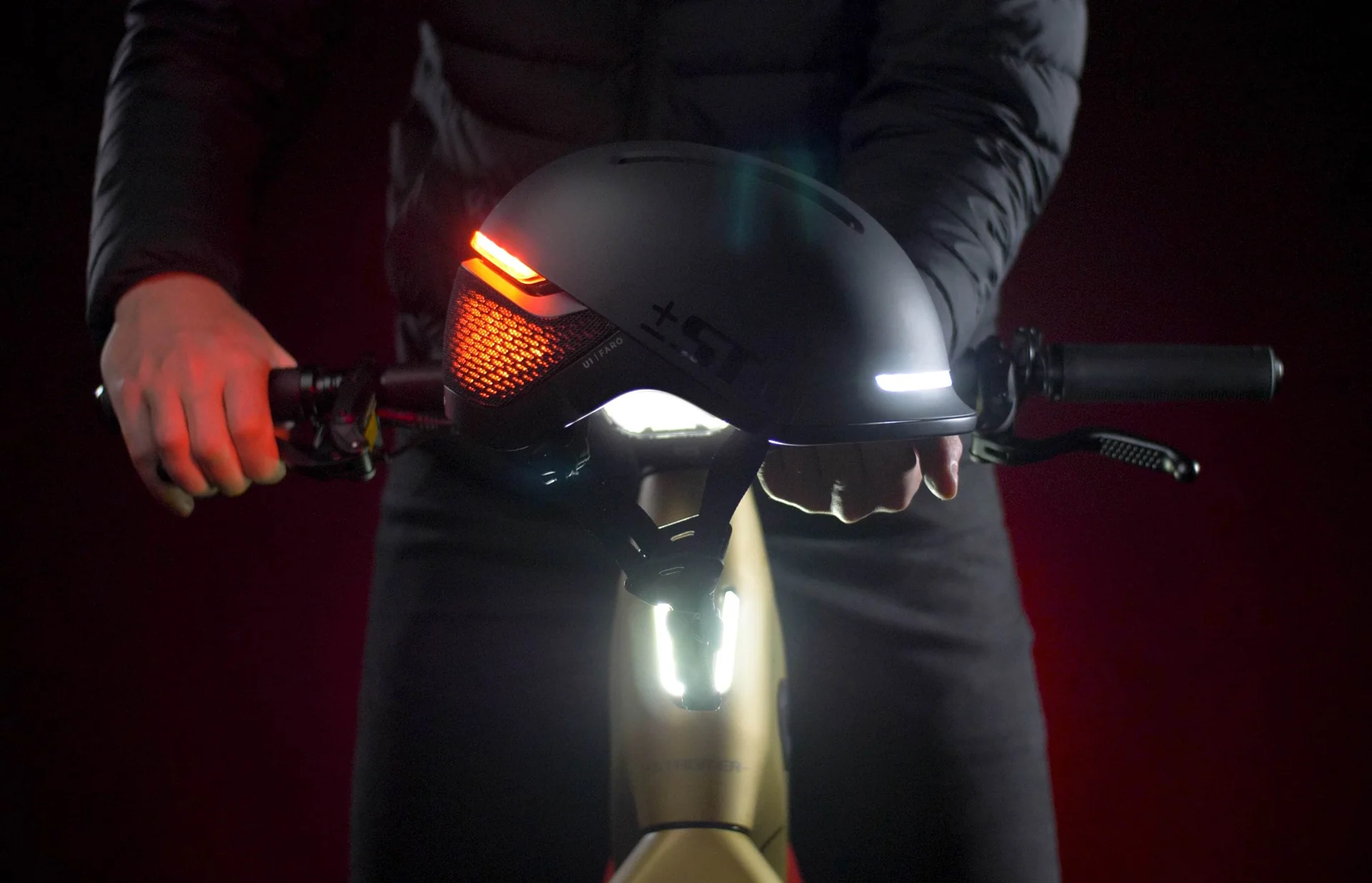
A helmet should be the first item on any long-distance cycling checklist.
That sounds obvious, but long trail rides introduce a few considerations that are easy to overlook. You might spend hours riding in changing light, encounter other cyclists, pass through wooded areas, ride over uneven surfaces or find yourself finishing later than planned.
The helmet needs to fit correctly and remain comfortable for the entire ride.
A helmet that feels fine for 30 minutes may become irritating after four or five hours. Pressure points, poor ventilation or a loose fit can become increasingly noticeable as the day progresses.
Before leaving for a multi-day trail trip, spend some time actually riding with the helmet you plan to use. Adjust the fit system, check the chin strap and make sure it stays secure when you move your head.
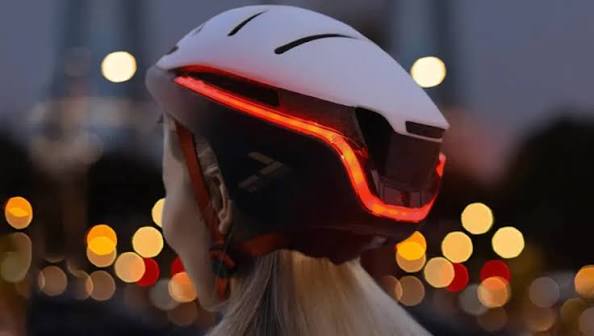
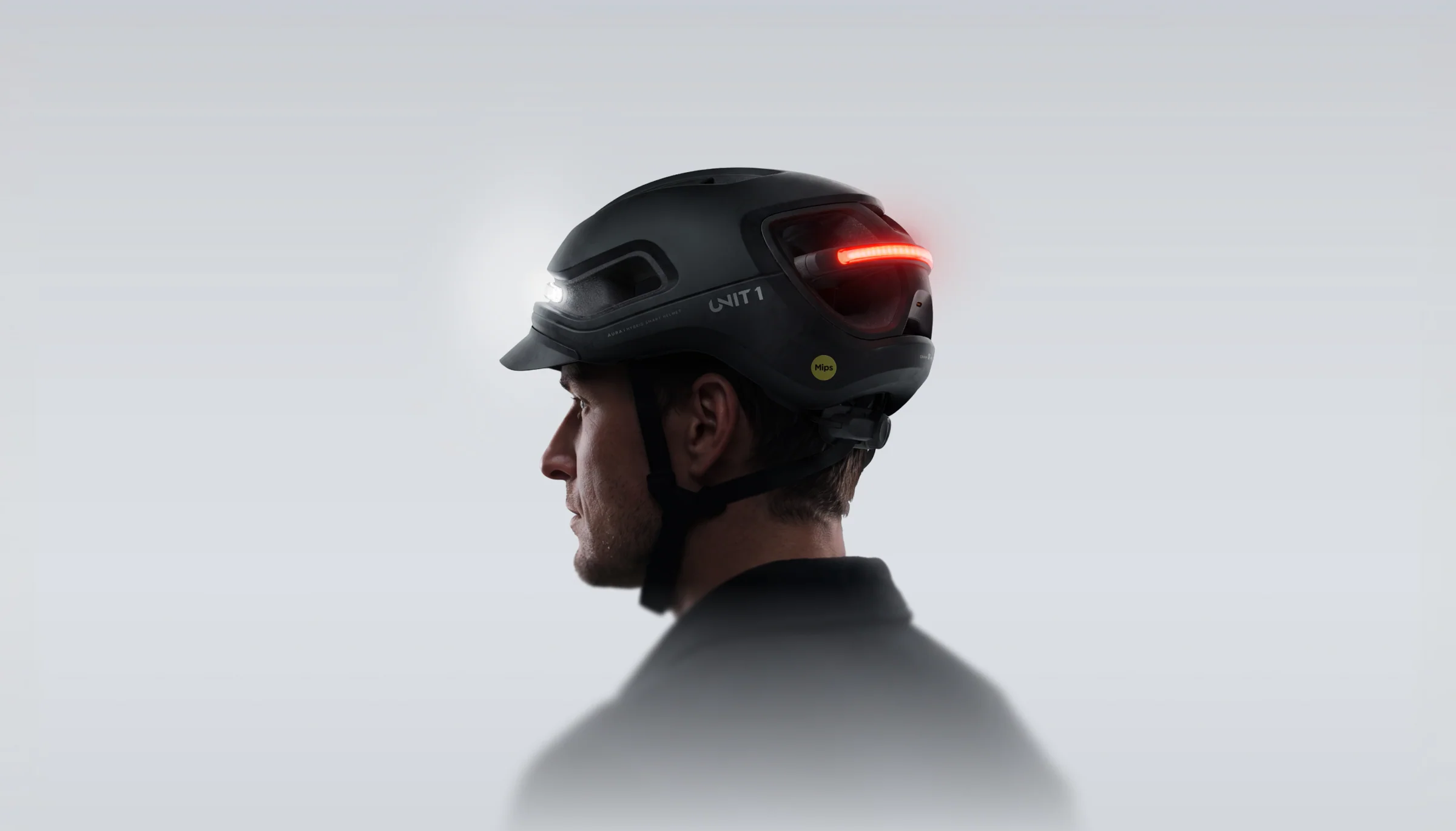
For riders looking for additional technology, UNIT 1’s AURA Mips is one option worth examining. UNIT 1 describes AURA as a smart helmet with Mips protection, integrated front and rear lights, turn signals, automatic brake lights and Crash Alert. The company lists AURA as compliant with CPSC and EN 1078 and certified to NTA 8776 for higher-speed e-bike riding.
The important point is not that a smart helmet replaces good riding habits. It does not. Instead, features such as integrated lighting and crash-alert technology can add another layer to the equipment you already use.
Mips is another feature to understand before choosing a helmet.
The Mips system is designed around rotational motion during certain impacts. UNIT 1 describes the Mips layer in AURA as a low-friction system intended to help reduce rotational motion transferred to the head.
That does not mean Mips makes a rider invulnerable, and it is not a substitute for riding defensively. A helmet remains one part of a broader safety system.
For a long-distance trip, however, choosing a helmet with the protective technology and certifications appropriate to your type of riding is a sensible place to start.
If you ride an e-bike, pay particular attention to the certification information rather than assuming that every bicycle helmet is tested for the same conditions. UNIT 1 lists AURA as NTA 8776 certified and describes that standard as being intended for higher-speed e-bike riding.
A long-distance trail ride does not necessarily mean you will be riding in darkness. Visibility can change long before sunset, though.
You may start before sunrise, enter a shaded section of trail, encounter a tunnel, ride beneath dense trees or simply find yourself returning later than expected.
That is why lights belong in the safety checklist even when your original plan is a daytime ride.
The GAP’s official safety guidance specifically recommends carrying a flashlight, headlamp or bike light for tunnels, while also advising riders to plan for daylight travel.
UNIT 1’s AURA takes a different approach from a conventional helmet by integrating front and rear lights into the helmet. The company says the AURA has front and rear integrated lighting and offers multiple light modes through the helmet and its app.
For a long-distance ride, integrated lighting has an obvious practical advantage: you do not have to remember to mount a separate helmet light.
That does not mean you should leave your bicycle lighting at home. A bike-mounted front and rear light can still be valuable, particularly if your route includes roads or shared-road sections.
Think of helmet lighting as one part of a complete visibility setup rather than the entire setup.

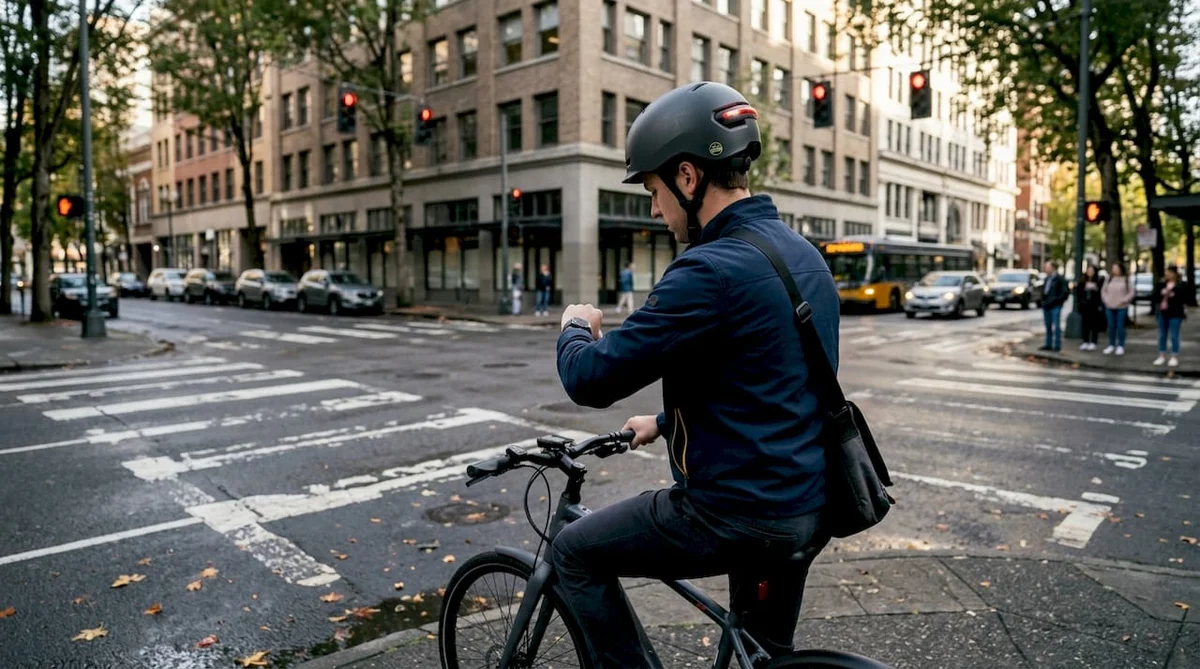
Long trail rides involve passing, intersections, trail crossings and occasional sections where cyclists share space with vehicles or other road users.
Communication matters.
The Great Allegheny Passage asks cyclists to travel single file, stay to the right, give an audible signal when passing and pass on the left only when it is safe. The trail also has road and railroad crossings where riders should stop and watch for vehicles and uneven surfaces.
UNIT 1 AURA supports turn signals when paired with the UNIT 1 Remote. The company says the remote lets riders control signals without taking their hands off the handlebars.
That can be useful when riding in environments where communicating your intentions matters.
There is one important detail to remember: smart turn signals do not replace normal hand signals or basic communication. UNIT 1 itself states that its turn signals do not replace required hand signals.
So the best approach is simple: use the technology as an additional communication tool while continuing to ride according to trail rules and local laws.
Brake lights are familiar to anyone who drives a car, but they are less common on traditional bicycles.
UNIT 1’s AURA includes an automatic brake-light function. According to the company, the system can detect deceleration and illuminate the rear light. The feature works with the UNIT 1 Remote.
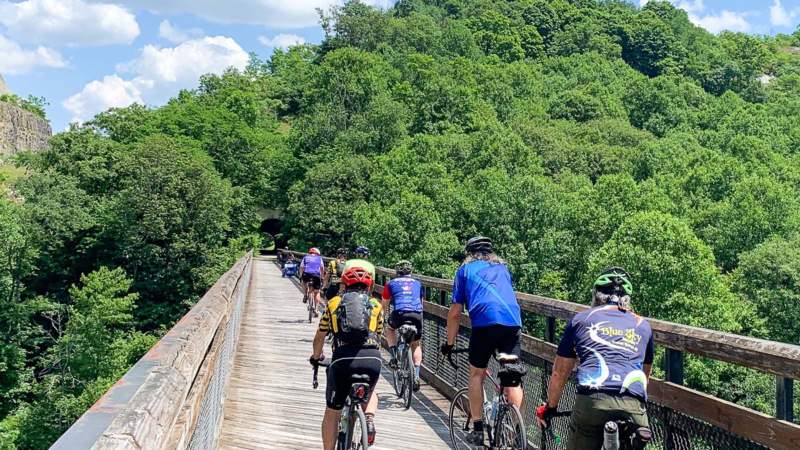
On a long-distance trail, this can be particularly relevant when riding in a group.
If one rider slows unexpectedly, the riders behind them need to react quickly. A visible rear light can provide another indication that the cyclist ahead is reducing speed.
Again, it is not a replacement for maintaining a safe following distance. Good spacing remains important, especially on a crowded trail or when visibility is limited.
One of the differences between a short city ride and a multi-day trail trip is how long you may spend away from immediate assistance.
The GAP passes through valleys, mountain areas and rural communities. The Katy Trail crosses long stretches of countryside and follows the Missouri River corridor for much of its route.
That makes emergency communication worth thinking about before starting the ride.
UNIT 1’s AURA includes a Crash Alert feature. According to UNIT 1, the helmet uses sensors to detect certain hard impacts. If a crash is detected, the app initiates a safety countdown. If the rider does not respond, the system can send an SMS alert containing the rider’s last known location, when available, to a designated emergency contact.
This is an optional smart feature, not a guarantee of emergency assistance.
Before relying on it, set it up properly, make sure the app and phone are functioning and understand how the alert process works. UNIT 1 also notes that app functionality can vary according to factors such as region, device, connectivity, operating system permissions and firmware.
A charged phone and an emergency contact should still be part of your regular trail safety plan.
No helmet, light or smart feature can fix a flat tire.
For either the GAP or Katy Trail, carry a basic repair kit appropriate to your bicycle.
At minimum, consider carrying:
Spare inner tubes if your bike uses tubes
Tire levers
A compact pump
A patch kit
A multitool
A chain quick link compatible with your drivetrain
A small amount of chain lubricant
Tire boot material for serious sidewall damage
Spare batteries where applicable
A small zip tie or two
A rag or disposable cloth
You do not necessarily need a full workshop in your handlebar bag.
The goal is to carry enough equipment to deal with common problems and reach the next repair opportunity safely.
Before the trip, practice changing a tube and making basic adjustments. There is a big difference between owning a multitool and knowing how to use it.
The surface is one of the biggest reasons to think about your bicycle setup before leaving.
The GAP has a predominantly crushed-limestone surface, and the Maryland Trails Program describes it as a packed crushed-limestone trail with an average grade of less than one percent.
The Katy Trail is also a crushed-limestone rail-trail. The National Park Service describes its surface as hard, crushed limestone.
That does not mean every section will feel exactly the same.
Weather can change the riding surface. Missouri State Parks specifically warns Katy Trail users about rough areas, washouts, fallen trees, rocks, standing water and other conditions that can appear following weather changes.
For that reason, tire choice should reflect the bike and the conditions rather than a desire to minimize rolling resistance at all costs.
Check your tire pressure before starting each day. If you are carrying luggage, remember that additional weight affects how the bike feels and how the tires behave.
Cycling gloves are easy to overlook because they are not as obvious as a helmet.
On a long ride, they can make a noticeable difference.
Hours of pressure on your palms can lead to discomfort or numbness. Gloves can also provide some protection if you fall and your hands instinctively reach toward the ground.
Choose a pair that fits without creating pressure points. If you already have a favorite pair, use them during your training rides rather than saving them for the trip.
Long-distance cycling is rarely improved by introducing brand-new gear on day one.
Sunglasses are about more than comfort.
They can help shield your eyes from wind, dust and insects while also making bright conditions easier to handle.
This is particularly useful on exposed sections of a trail where there may not be much shade.
If you use a helmet with a compatible visor, that can provide another option. UNIT 1 offers magnetic visors for AURA, including clear and tinted options, and the company also lists a Speed Visor as an accessory.
Choose the option that suits your riding conditions.
For a long-distance trip, versatility can be useful because the weather you start with may not be the weather you finish with.

The safest gear checklist is not only about protective equipment.
Clothing affects comfort, temperature regulation and your ability to keep riding safely.
Use moisture-managing cycling clothing where appropriate and consider layers rather than one heavy garment.
For cooler mornings, a lightweight base layer and packable outer layer can be more useful than a bulky jacket.
For hot conditions, prioritize breathable clothing and sun protection.
And do not forget socks.
A comfortable pair of cycling socks can make a surprisingly large difference after several hours in the saddle.
Weather can change quickly on a long trail.
A rain jacket that packs down small can be worth carrying even when the forecast looks favorable.
The reason is simple: your trip may last several days, and weather forecasts can change.
Wet clothing also changes the riding experience. On a long-distance trip, staying wet for hours can turn a manageable day into a miserable one.
The GAP’s official guidance specifically tells visitors to prepare for different weather and trail conditions.
Missouri State Parks similarly advises Katy Trail users to check the weather and be aware of conditions that can affect the trail.
A lightweight rain shell, waterproof phone protection and a way to keep essential electronics dry should therefore be on the packing list.
Hydration planning becomes increasingly important as your daily mileage increases.
Do not simply assume you can refill whenever you feel thirsty.
Instead, look at your planned route and identify available services and refill points before the ride.
Carry enough water capacity for the longest section between reliable opportunities.
On hot days, your needs will be different from those on a cool autumn morning.
A hydration pack can be useful for some riders, while others prefer bottles mounted on the bicycle. There is no universal answer.
What matters is that your setup allows you to drink regularly without creating an unsafe riding position.
Long-distance cycling requires more than water.
Pack food that you know you can tolerate while riding.
Energy bars, bananas, sandwiches, dried fruit, trail mix and other easy-to-carry foods can all work depending on your preferences.
Do not make the trip your first experiment with unfamiliar sports nutrition.
A multi-day trail is not the time to discover that a particular energy gel upsets your stomach.
Plan meals around your route while carrying emergency calories in case a stop is closed or you arrive later than expected.
Your phone can serve several purposes on a long-distance ride.
It may be your navigation device, communication tool, camera, emergency contact method and, in the case of compatible UNIT 1 smart features, part of the helmet’s safety system.
That makes battery management important.
Carry a power bank and the appropriate charging cable.
Keep the phone protected from rain and accidental drops.
If you plan to use your phone for navigation, download maps or other information that may be useful without relying entirely on a strong cellular connection.
Before leaving each morning, check the battery level.
A phone at 20 percent is not the same safety resource as a fully charged phone.
Missouri State Parks specifically recommends carrying a cellphone and ID when using the Katy Trail.
That is good general advice for any long-distance cycling trip.
Carry identification and emergency contact information in a location that is accessible if you become separated from your bicycle or cannot access your phone.
If you have important medical information that emergency responders should know, consider carrying it in an appropriate emergency-information format.
This is a small preparation step that can matter when something goes wrong.

You do not need to carry a hospital in your saddlebag.
A compact first-aid kit can cover common minor problems such as:
Small cuts
Scrapes
Blisters
Hot spots
Minor abrasions
Basic wound cleaning
Add anything you personally know you need.
Blister care deserves particular attention on multi-day trips. A small foot problem on day one can become a major problem by day four.
Check your feet regularly and deal with hot spots before they become full blisters.
A long-distance ride can mean hours outdoors.
Apply sunscreen before setting out and carry enough to reapply.
The same applies to insect protection depending on the season and location.
The Katy Trail passes through forests, wetlands, fields and areas alongside the Missouri River, while the GAP travels through valleys, wooded areas and river corridors.
Your clothing choices should reflect the weather, but exposed skin still needs attention.
The Great Allegheny Passage has some straightforward rules that should become part of your riding routine.
The trail’s official guidance lists a 15 mph speed limit and asks riders to travel single file and stay to the right. Cyclists should give an audible signal when passing and pass on the left only when it is safe. Riders should slow down when the trail is slippery or crowded.
Railroad crossings, street crossings, bollards and uneven surfaces also require attention.
These details are particularly important on a long ride because fatigue can gradually reduce concentration.
If you find yourself riding automatically rather than actively paying attention, it is time for a break.
The Big Savage Tunnel is one of the distinctive features of the GAP.
It is also something to plan around.
The GAP’s official information states that the tunnel closes from late November to early April and that there is no detour during the closure. The trail also recommends a flashlight, headlamp or bike light for tunnels.
That makes lighting more than an optional accessory if your itinerary includes the tunnel during an open period.
Check the current trail status before your trip rather than relying solely on an old itinerary.
The Katy Trail is often described as an approachable rail-trail, but approachable does not mean maintenance-free.
Missouri State Parks warns riders about rough surfaces, washouts, fallen trees, fallen rocks, water over the trail and maintenance or construction activity. Wildlife and domestic animals can also appear.
This is why riders should avoid treating a long trail as though it were a perfectly predictable paved bike path.
Slow down when conditions change.
Give yourself room to maneuver.
Avoid staring at your phone while riding.
And if a section looks significantly different from what you expected, adjust your speed accordingly.

A multi-day trip deserves a morning safety check.
Before leaving your accommodation, check:
Weather
Trail advisories
Planned mileage
Water availability
Food stops
Mechanical condition
Phone battery
Helmet battery
Light battery
Road or trail closures
Your own energy level
The Katy Trail State Park maintains a trail-conditions page and currently warns that rough areas can develop because of weather variations.
The GAP also publishes trail alerts and safety information.
Conditions can change after storms, maintenance work or other events, so checking the official information shortly before riding is much better than relying on a blog post written months earlier.
A smart helmet introduces one extra consideration that a traditional helmet does not: battery management.
UNIT 1 states that AURA’s battery life can range from approximately three to twelve hours depending on settings.
That range is significant for long-distance riders.
If you are riding for several hours, choose your lighting settings with the day’s mileage in mind.
Charge the helmet before the ride.
If you carry a power bank, make sure you have the correct cable and understand when and how the helmet can be charged.
Do not assume that because the helmet worked perfectly on a short test ride, it will automatically have enough battery for a full day.
If you choose AURA, set up the associated app before your long-distance ride.
UNIT 1’s support documentation includes setup guidance for Crash Alert, Safety ID, light modes, turn signals, brake lights and device updates.
This is something I would do several days before departure rather than at the trailhead.
Pair the helmet.
Configure the features you intend to use.
Check the emergency contact information.
Test the lights.
Test the remote if you are using one.
Confirm the phone connection.
Then go for a normal local ride.
That gives you a chance to discover any setup problems while you are still close to home.
AURA’s turn signals and automatic brake-light functions can be used with the UNIT 1 Remote, which is sold separately.
For a long-distance ride, a handlebar-mounted remote can make sense because the controls are positioned where the rider can reach them.
The benefit is less about adding another gadget and more about putting the relevant controls in a predictable location.
As with any new cycling equipment, practice first.
You should know where the control is without looking down.
Your attention belongs on the trail.
Even if your helmet has integrated lighting, carrying another light is sensible.
A backup light can be useful if the main light runs out of battery, becomes damaged or simply does not provide the coverage you need.
This is especially relevant on a long-distance trip because your normal riding day may not go according to plan.
UNIT 1 also makes Smart Light products that can function as front or rear lights and integrate with its smart-helmet ecosystem. The company lists features including multiple light modes, turn signals, automatic brake lights and weather resistance for its Smart Light.
That can be an option for riders who want their lighting equipment to work together.

Packing everything is not enough.
You need to be able to reach the things you may need while riding.
Put frequently used items somewhere accessible.
For example:
Phone in a secure pocket or handlebar bag
Snacks where you can reach them during a break
Rain jacket near the top of your bag
Repair kit in a dedicated compartment
Identification in a secure location
Spare tube where it will not get buried beneath clothing
Emergency information somewhere easy to find
Avoid filling one huge bag with everything.
Organization saves time when something goes wrong.
A five-day cycling trip can tempt you to pack everything.
Resist that temptation.
Every unnecessary item becomes weight you carry for hundreds of miles.
Start with safety and mechanical essentials.
Then add clothing and personal items.
If you are staying in hotels or other accommodations, you may not need camping equipment.
If you are camping, your equipment list will obviously be much larger.
The best packing list is the one that matches your actual trip rather than someone else’s.
Safety is not only about your own equipment.
Your behavior affects everyone sharing the trail.
Stay to the appropriate side.
Give people warning when passing.
Slow down around pedestrians and slower cyclists.
Be particularly careful around children, older riders and people who may move unpredictably.
The GAP specifically advises giving extra space to younger or older travelers and slowing down when crowded.
On the Katy Trail, remember that the route can be shared with hikers and, on permitted sections, equestrians.
A good long-distance ride is not about maintaining the highest possible average speed. It is about reaching the end of the day safely and leaving the trail enjoyable for the next person.
If the Great Allegheny Passage is your destination, use this checklist before departure:
Properly fitted cycling helmet
Front and rear bike lights
Helmet light or integrated lighting
Spare tube and tire tools
Pump
Multitool
Phone
Power bank
Identification
Emergency contact information
Water bottles or hydration pack
Food and snacks
Sunglasses
Sunscreen
Rain shell
Cycling gloves
Basic first-aid kit
Appropriate clothing layers
Bike lock where needed
Map or offline navigation
Headlamp or flashlight for tunnel use
Weather information
Current GAP trail alerts
Remember that the GAP is a 150-mile route, and its official guidance emphasizes preparing for weather and trail conditions.
For the Katy Trail, the basic list is similar:
Properly fitted helmet
Front and rear bike lights
Spare tubes
Tire levers
Pump
Multitool
Phone and backup battery
Identification
Emergency contact information
Water
High-energy snacks
Sunglasses
Sunscreen
Rain jacket
Gloves
First-aid supplies
Comfortable cycling clothing
Extra layers
Offline maps
Weather information
Current trail-condition information
Basic wildlife and insect awareness
Repair supplies appropriate for your bicycle
Missouri State Parks recommends cyclists wear helmets, carry a cellphone and ID, check the weather and avoid riding alone where possible.
The park also advises users to remain aware of their surroundings and location.
A smart helmet is not necessary for every cyclist.
Some riders prefer a simple helmet and separate lights. That approach can work perfectly well.
The appeal of something like the UNIT 1 AURA Mips is that several functions are combined into one helmet.
AURA includes Mips protection, NTA 8776 certification, integrated front and rear lights, automatic brake lights, turn signals when paired with the Remote and Crash Alert.
For someone preparing for long rides, having these features integrated into the helmet can reduce the number of separate devices that need to be mounted, charged and remembered.
The helmet also has 14 vents according to UNIT 1, along with removable internal pads and three sizes. The company lists the helmet at approximately 440 grams.
Those are practical details worth considering alongside the safety features.
The right choice ultimately comes down to the rider, the bicycle, the route and how much technology they actually want to manage.
It is worth being realistic about smart equipment.
A helmet does not replace a properly maintained bicycle.
Integrated lights do not replace awareness.
Crash Alert does not replace a phone.
Turn signals do not replace hand signals or communication.
NTA 8776 certification does not mean a rider cannot be injured.
And no helmet can compensate for riding too fast for trail conditions.
UNIT 1’s own support information makes some of these limitations clear, including the fact that turn signals do not replace required hand signals and that Crash Alert depends on the feature being enabled and available system conditions.
That is exactly how smart cycling equipment should be viewed: as an additional part of a broader safety system.

The best gear checklist is useless if you discover a problem on day one.
A week or two before the trip, take your fully loaded bicycle out for a long practice ride.
Wear the helmet.
Use the lights.
Carry the bags.
Use the water bottles.
Eat the food you plan to carry.
Wear the clothing.
Test your navigation.
Try your repair kit.
If you are using the UNIT 1 AURA, test the app, Crash Alert setup, lighting modes and Remote before the trip.
This practice ride will reveal problems that are difficult to identify while packing in your garage.
Maybe the saddlebag rubs against your leg.
Maybe the gloves are uncomfortable.
Maybe the helmet needs another adjustment.
Maybe your water capacity is too small.
Finding those issues before the actual trail is exactly what a test ride is for.
There is a strange psychological effect that can happen on long trails.
When you know you have 40 or 50 miles ahead, you may feel pressure to maintain a certain pace.
That is often counterproductive.
The GAP is approximately 150 miles long, while the Katy Trail stretches about 240 miles. These are endurance-oriented journeys where your experience is shaped by many hours in the saddle rather than a single fast effort.
Take breaks.
Eat before you are exhausted.
Drink before you are extremely thirsty.
Slow down when the surface changes.
Stop when you need to check your route.
And if the weather becomes poor, reassess the plan.
There is nothing wrong with arriving later than expected.
Before leaving for the Great Allegheny Passage or Katy Trail, run through this final list:
Helmet
Make sure it fits properly and is in good condition. If you choose AURA Mips, confirm the correct size and configure the features you intend to use.
Visibility
Carry appropriate front and rear lighting. If using AURA, check that the integrated lights are charged and configured.
Communication
Carry your phone, identification and emergency contact information.
Navigation
Have your route available offline and know the day’s planned distance.
Mechanical equipment
Carry the tools needed for common repairs.
Hydration
Know where you can refill and carry enough water for the longest section.
Nutrition
Pack enough food for the planned ride plus some emergency calories.
Weather protection
Carry layers and rain protection suitable for the forecast.
Sun protection
Bring sunglasses and sunscreen.
First aid
Carry supplies for minor injuries and foot problems.
Trail information
Check official trail conditions and alerts before leaving.
Battery
Charge your phone, lights, helmet and other electronic equipment.
Emergency planning
Make sure someone knows your itinerary, particularly for a solo ride.
Riding behavior
Stay aware, respect other trail users, obey posted rules and slow down when conditions demand it.
The Great Allegheny Passage and Katy Trail are different experiences, but they have something important in common: they reward preparation.
Both routes are long enough that small problems can become big ones when they are ignored. A low tire, uncomfortable helmet, depleted phone battery or unexpected weather problem may not matter much during a short local ride. On a multi-day trip, the same issue can affect an entire day’s plan.
Start with the basics.
Use a properly fitted helmet. Carry water, food, repair equipment and a phone. Dress for the weather. Check trail conditions. Give other trail users plenty of room. Keep your speed appropriate for the surface and surroundings.
Then consider which technology genuinely adds value to your riding.
For cyclists who want more integrated visibility and smart safety features, the UNIT 1 AURA Mips is an interesting option. UNIT 1 combines Mips protection and multiple helmet certifications with integrated front and rear lighting, turn signals, automatic brake lights and Crash Alert.
That combination can be particularly appealing on a long-distance ride where visibility and communication remain important throughout the day.
But the most useful piece of safety equipment is still the one you actually use correctly.
A sophisticated helmet cannot replace preparation. A powerful light cannot replace awareness. And a long-distance trail should never be treated as a race simply because the route is relatively smooth or flat.
Prepare the bicycle.
Prepare the rider.
Prepare for the weather.
Check the trail.
And then enjoy the ride.
For riders interested in exploring UNIT 1’s current smart helmet lineup and the AURA Mips, the official UNIT 1 website has the latest product specifications, configurations and accessories.