
For a long time, buying a bike helmet was a fairly simple decision. Find the right size, check that it meets the required safety standard, make sure it feels comfortable, and get on with your ride.
That has changed.
Today, some bike helmets are designed to do considerably more than provide a layer of protection around your head. Smart helmets can combine conventional impact protection with integrated lights, turn signals, automatic brake lights, smartphone connectivity and crash detection. Instead of treating visibility and emergency communication as separate accessories, the technology is built directly into the helmet.
That naturally raises a question: is a smart bike helmet actually worth paying more for?
The answer depends on how and where you ride. Someone who only cycles around a quiet neighborhood in daylight may have little reason to pay for advanced features. A person who commutes through busy city streets, rides an e-bike, regularly travels before sunrise or after sunset, or spends a lot of time around cars may see considerably more value in having additional visibility and connected safety features.
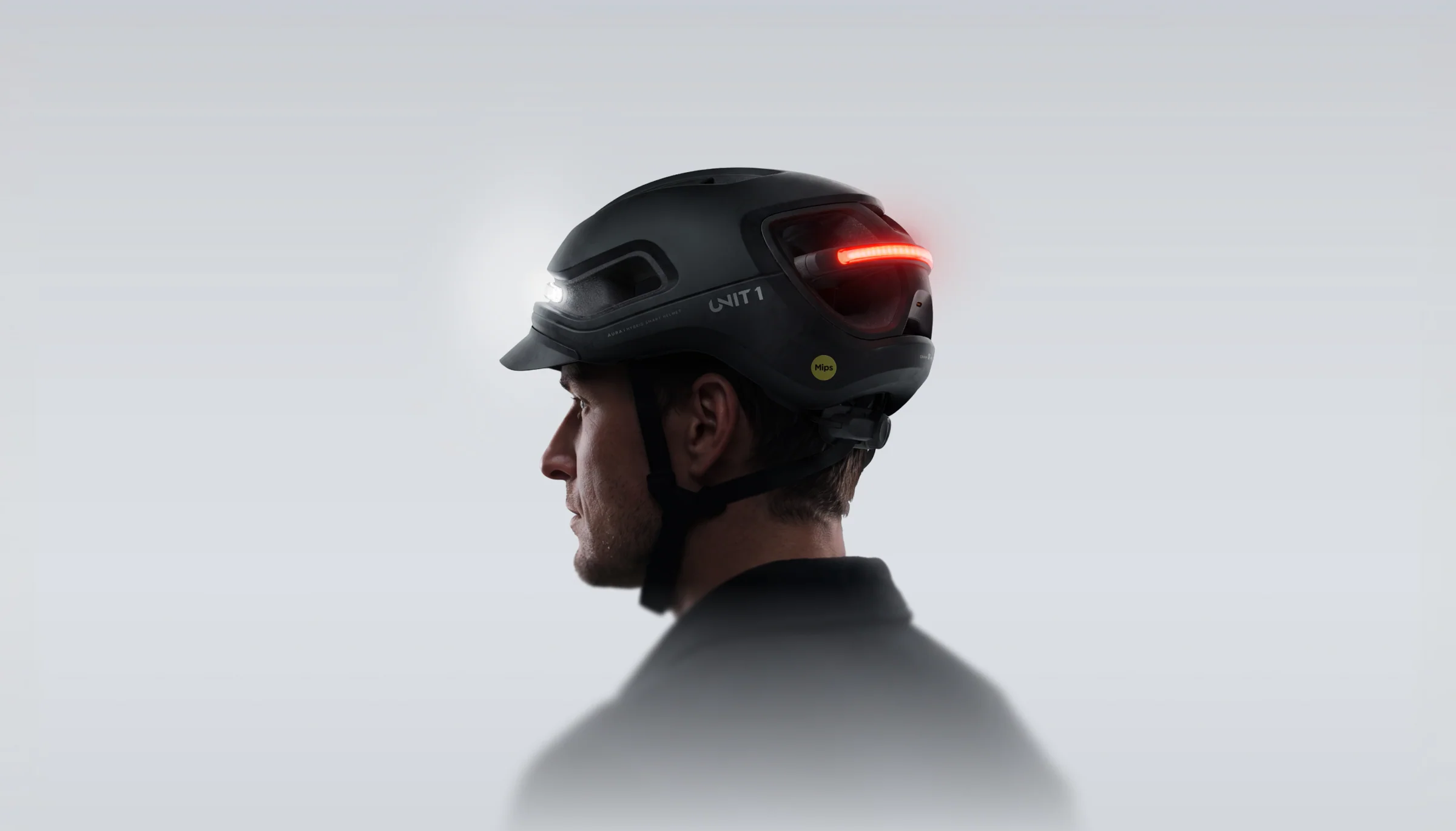
UNIT 1 is one of the brands working in this category, with its AURA Mips smart helmet combining MIPS protection, integrated front and rear lighting, turn signals, an automatic brake light and Crash Alert functionality. AURA is also certified to NTA 8776 for higher-speed e-bike riding, alongside CPSC and EN-1078 compliance.
But what do these features actually mean for a rider? And which ones matter most?
Here is a closer look at MIPS, smart lighting, turn signals and SOS crash alerts, along with the situations where a smart helmet can make practical sense.
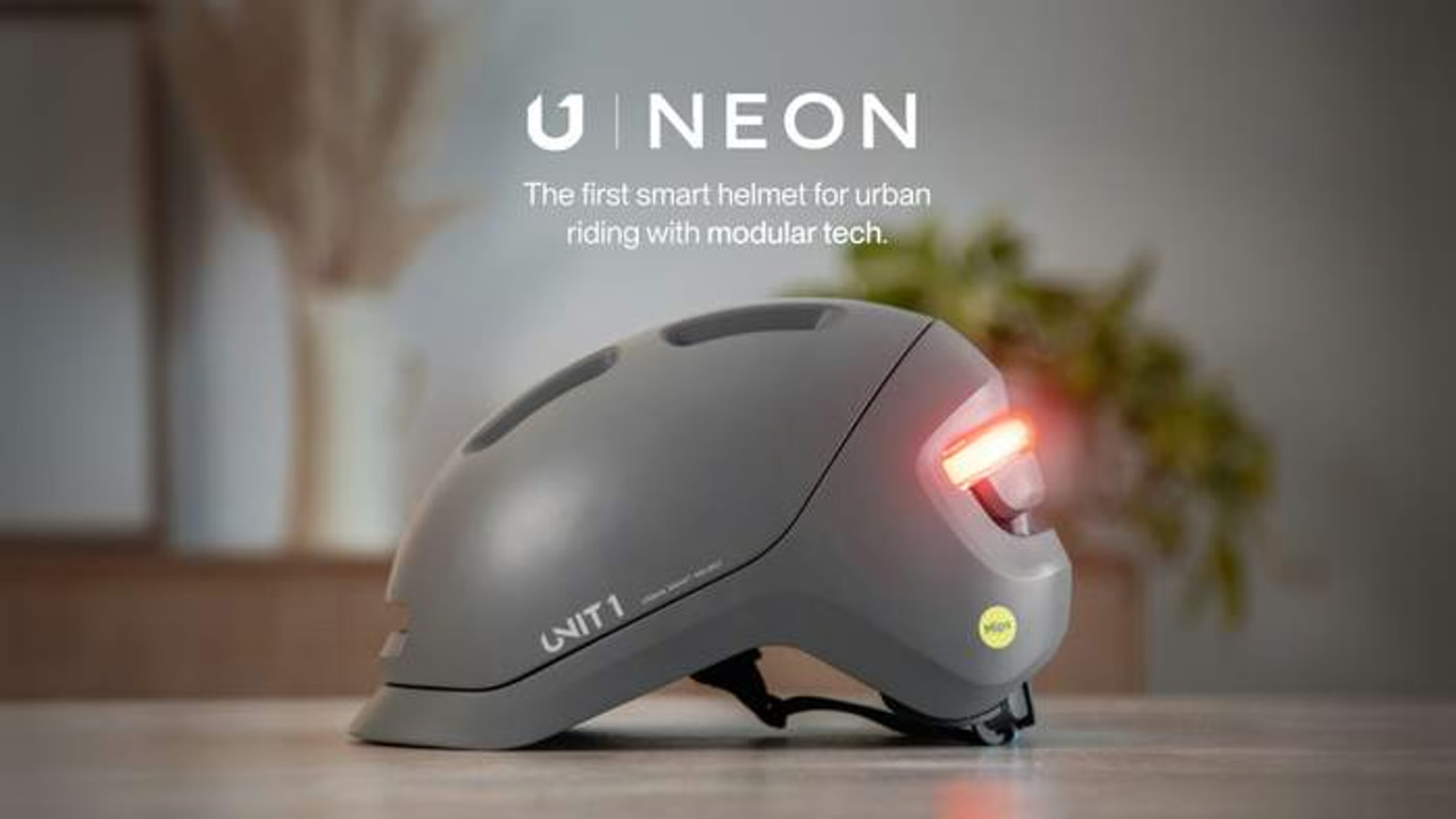
A smart bike helmet is essentially a cycling helmet that combines traditional protective construction with electronic features.
The basic job remains the same. A helmet needs to fit properly and provide appropriate protection in the event of a crash. Smart technology does not change that fundamental requirement.
What changes is everything around the basic protective function.
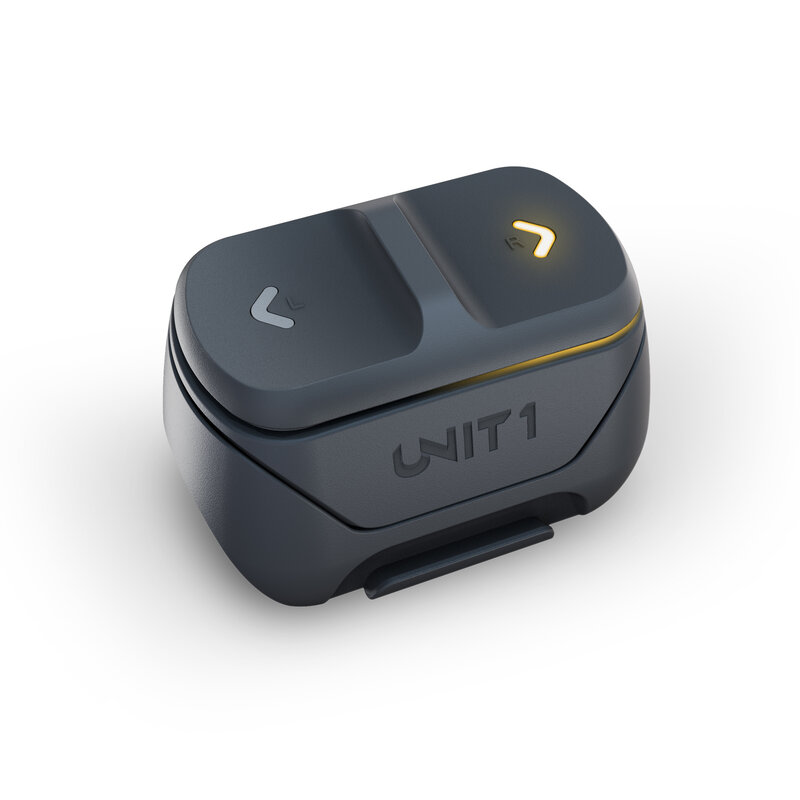
Depending on the helmet, smart features can include LED lights, connectivity with a mobile app, sensors, turn signals, brake lights and crash detection. Some systems allow riders to customize lighting behavior or control certain functions using a handlebar-mounted remote.
UNIT 1 describes this approach as “Active Safety,” with technology intended to provide visibility and assistance before, during and after a crash. Its AURA helmet, for example, has integrated front and rear lighting, while the turn signals and automatic brake-light functions can be operated through the UNIT 1 Remote.
That distinction is important.
A regular helmet is primarily passive protection. It is there when something goes wrong.
A smart helmet can still provide that passive protection while also helping communicate your presence and intentions to other road users.
It does not mean a smart helmet can prevent every accident. Lights cannot guarantee that a driver will see you, and a crash-detection system cannot replace emergency services or responsible riding. The technology should be viewed as another layer of safety rather than a substitute for good riding habits.
MIPS stands for Multi-directional Impact Protection System.
It is designed to address rotational motion that can occur when a helmet experiences certain angled impacts. Instead of thinking only about a straight impact, MIPS technology considers what can happen when a rider hits the ground or another object at an angle.
UNIT 1 describes its MIPS system as a low-friction layer designed to help reduce rotational forces transferred to the head during certain angled impacts.
That makes MIPS different from features such as lights or Bluetooth connectivity.
Lights are primarily about visibility. MIPS is part of the helmet’s impact-protection system.
This is one reason MIPS is worth understanding before getting distracted by the “smart” part of a smart helmet. Electronics are useful, but the helmet still needs to perform its fundamental job as protective equipment.
AURA Mips incorporates the MIPS safety system and is also certified to NTA 8776 for higher-speed e-bike riding. UNIT 1 lists AURA as compliant with CPSC and EN-1078 as well.
It is easy to look at a technology such as MIPS and assume that the technology itself determines whether a helmet is safe.
It does not.
Fit remains extremely important.
A helmet should sit correctly on your head, be the appropriate size and be fastened properly. A helmet that is too loose, incorrectly positioned or uncomfortable enough that you stop wearing it cannot provide the intended protection.
That is particularly relevant when shopping online.
UNIT 1’s AURA is available in three sizes, S, M and L, with internal padding designed to adapt to different head shapes. The company lists the helmet at approximately 440 grams.
Before ordering any helmet, measure your head according to the manufacturer’s instructions and compare that measurement with the available size information.
The smartest helmet in the world is still the wrong helmet if it does not fit you properly.
Most regular cyclists already understand the importance of lights when riding at night.
The interesting part about helmet-integrated lighting is the position of the light.
A bicycle light attached to the handlebars is relatively low. A rear light mounted near the seat is also close to the height of the bicycle itself.
A helmet puts lighting higher up.
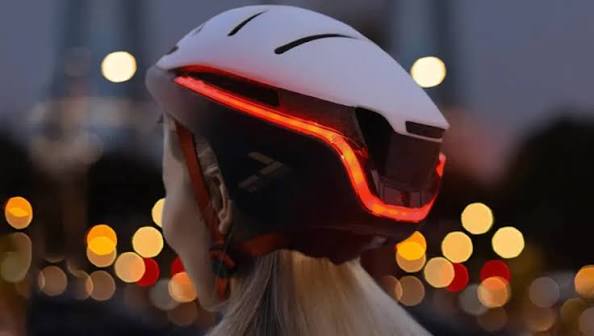
That can provide another visual point for drivers and other road users to notice. UNIT 1’s AURA has integrated front and rear lights, designed for visibility during both daytime and nighttime riding.
This does not mean you should automatically remove every other light from your bicycle. In many riding situations, using multiple visibility points can make sense.
Think of the helmet light as another part of the overall visibility setup.
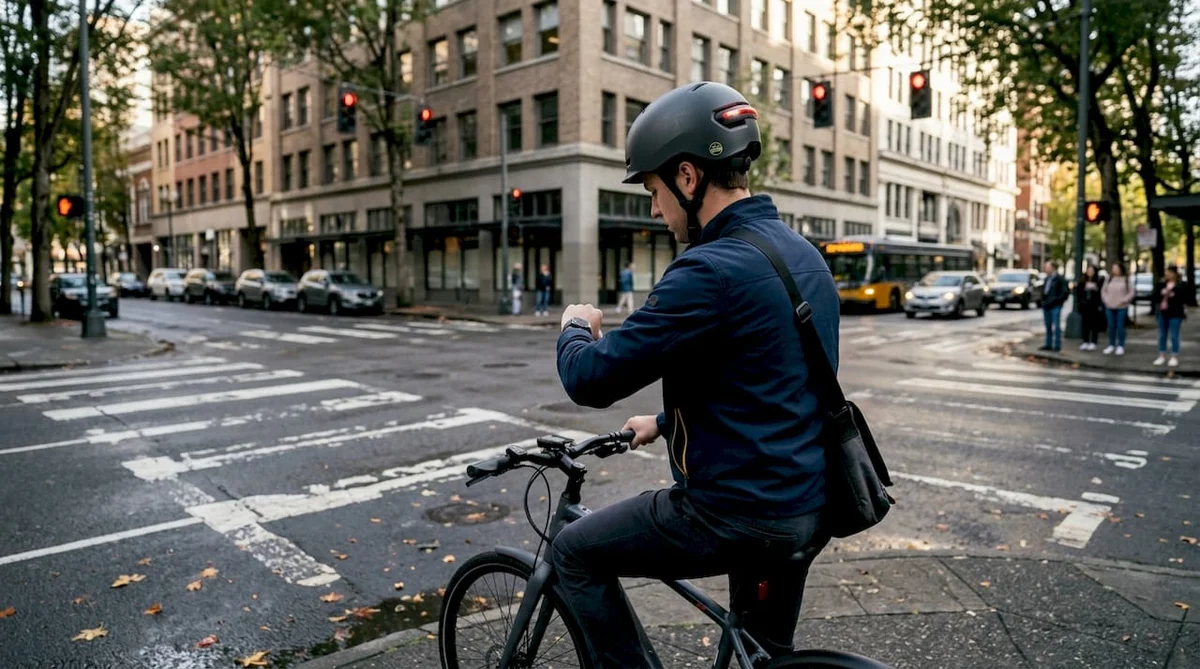
For commuters, this can be especially useful because urban riding often involves constantly changing conditions. You might leave home in daylight, encounter shaded roads, enter a parking garage, ride through tunnels or return after dark.
Having lighting built into the helmet means the light is always positioned with your head.
This is one of the more interesting features of a smart helmet.
Cyclists have traditionally used hand signals to communicate turns. Hand signals are useful, but they require taking one hand away from the handlebar.
A helmet with integrated turn signals provides another way to communicate a rider’s intentions.
On AURA, the turn signals can be controlled using the UNIT 1 Remote mounted on the handlebar. UNIT 1 says this allows riders to signal without taking their hands off the bars.
Imagine approaching an intersection during your commute.
You need to slow down, maintain control, watch traffic and prepare for a turn. Being able to activate a turn signal from the handlebar gives drivers and other riders another visual indication of what you intend to do.
It is not a replacement for paying attention or following local cycling rules. It is simply an additional communication tool.
For riders who spend most of their time on quiet bike paths, turn signals may not make much difference.
For someone riding alongside traffic every day, they can become considerably more useful.
Turn signals communicate where you are going.
Brake lights communicate that you are slowing down.
AURA includes an automatic brake-light function. UNIT 1 says the feature can automatically signal deceleration, while the behavior can be customized through the UNIT 1 app. The brake-light function is available through the UNIT 1 Remote setup.
That can be particularly relevant when riding in traffic.
A cyclist slowing down may not always be immediately obvious to a vehicle behind them. A dedicated rear light changing behavior when the rider decelerates provides an additional visual cue.
Again, this should not be treated as a guarantee that a driver will react correctly. A brake light is a communication aid, not a substitute for awareness.
But that is the broader appeal of smart cycling technology.
Instead of expecting everyone around you to understand exactly what you are doing, you have another way to make your movements more visible.

Crash detection is probably the feature that most clearly separates a smart helmet from a conventional one.
UNIT 1’s AURA includes Crash Alert. According to UNIT 1, onboard accelerometers and sensors can detect a hard crash. The app then initiates a safety check. If the rider does not respond, the system can send an SMS containing the rider’s location to an emergency contact selected in the app.
That sequence matters.
The helmet does not simply assume that every impact is an emergency.
UNIT 1 explains that mild bumps are not intended to trigger the system. Following a hard impact, the app starts a safety-check countdown. If the rider does not respond, the SOS is sent to the designated emergency contact.
This is particularly relevant for people who ride alone.
A crash can become much more serious when a rider is unable to reach their phone or communicate with someone nearby. An automated alert system can provide another route for communicating that something has happened.
Of course, riders should understand how the feature works before relying on it. The UNIT 1 app needs to be open with Crash Detection active, and an emergency contact needs to be configured. The system also relies on the connected phone and its location functionality.
That means Crash Alert should be viewed as a useful additional safety system, not a replacement for a phone, emergency services or sensible riding practices.
It can be, particularly for people who regularly ride alone.
Consider a typical commute.
You leave home in the morning, ride several miles to work and return later in the evening. Most days are completely uneventful. That is exactly what you want.
But if you have a serious fall and become unable to respond, the situation changes.
A conventional helmet can protect your head, but it cannot contact someone.
A connected helmet with crash detection adds another capability. With AURA, UNIT 1 says the system can send an SOS text with your location to a chosen emergency contact when a hard crash is detected and the rider does not respond to the safety check.
That does not make the helmet an emergency-response device in the same sense as a dedicated emergency service system. There are also practical dependencies such as the phone, app and connectivity.
Still, for a rider who frequently travels alone, it is a feature worth considering.
E-bikes have changed the conversation around bicycle helmets.
Depending on the bike and local regulations, riders can travel at speeds that make helmet selection particularly important.
NTA 8776 is a standard developed specifically for higher-speed electric bicycles. UNIT 1 lists AURA as NTA 8776 certified for riding up to 45 km/h, or approximately 28 mph.
AURA also carries CPSC and EN-1078 compliance according to UNIT 1’s current product information.
For an e-bike commuter, looking beyond the basic appearance of a helmet can therefore make sense.
Instead of simply asking, “Does this helmet look comfortable?” it is worth asking:
What standard is it certified to?
Is that certification appropriate for the way I ride?
Does the helmet fit correctly?
Does it provide the visibility I need?
Are the additional smart features genuinely useful for my commute?
Those questions are more helpful than choosing a helmet simply because it has the most electronics.

UNIT 1’s AURA Mips is designed around the idea that a helmet can combine traditional protection with active safety technology.
The current AURA product page lists MIPS protection, NTA 8776 e-bike certification, integrated front and rear lights, Crash Alert, turn signals and an automatic brake light.
The helmet can also connect with the UNIT 1 app.
Through the app, riders can customize lighting and manage aspects of the helmet’s smart system. UNIT 1 says AURA’s lighting modes, brightness, turn-signal behavior and brake-light settings can be customized.
That gives AURA a slightly different character from a helmet where the electronics are essentially an extra light attached to the shell.
The lighting and signaling functions are designed as part of the helmet itself.
The UNIT 1 Remote adds another layer of control. It is sold separately from the helmet, so shoppers should account for that when comparing configurations. UNIT 1’s product listings show packages that combine AURA with the Remote, while the helmet-only option does not include it.
Price is probably the biggest reason someone might hesitate before buying a smart helmet.
At the time of writing, UNIT 1 lists the AURA Mips helmet at $260 on its US product page, although pricing and promotional offers can change.
That is more than many basic bicycle helmets.
The question is therefore not whether a smart helmet costs more. It clearly can.
The better question is what you are getting for the additional cost.
With AURA, the package combines helmet protection with integrated lighting, MIPS, e-bike certification, crash detection and smart connectivity. The Remote, required for turn signals and automatic brake-light control, is an additional component and is included in certain bundles rather than the helmet-only configuration.
A rider who already owns a high-quality helmet, front light, rear light and other safety equipment may decide that upgrading is unnecessary.
A rider starting from scratch may see the integrated approach differently.
Smart helmets are not automatically useful for every cyclist.
They make the most sense when the features solve problems that you actually encounter.
A daily city commuter is one obvious example.
Urban roads can involve cars, buses, intersections, parked vehicles, pedestrians and frequent changes in lighting. Integrated lights and turn signals can provide additional communication with surrounding traffic.
E-bike riders are another group worth considering. AURA’s NTA 8776 certification is specifically relevant to higher-speed e-bike riding.
People who frequently ride at dawn or after dark may also appreciate having front and rear lighting directly on the helmet.
And then there are riders who regularly cycle alone.
For them, Crash Alert may be one of the more meaningful smart features because of its ability to contact a selected emergency contact if a detected hard crash is followed by no response.
There are plenty of cyclists who may not need one.
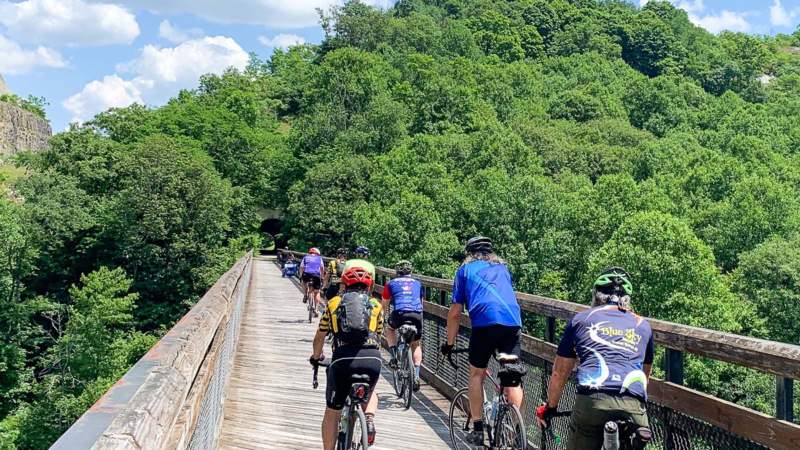
If your cycling consists mostly of short daytime rides on quiet streets or separated trails, a conventional certified helmet may already meet your needs.
Someone who rarely rides in traffic may not get much value from turn signals.
Someone who already has a comprehensive lighting setup may not care about integrated helmet lights.
And if you rarely ride alone, you may place less importance on automated crash alerts.
There is nothing wrong with keeping things simple.
The goal of a helmet is not to have the longest list of features. The goal is to have appropriate protection and a setup that you will actually use consistently.
Smart features are most valuable when they solve a real problem in your riding routine.
No.
This is perhaps the most important point to keep in mind.
A turn signal does not make an intersection safe by itself.
A bright light does not guarantee that a driver will see you.
MIPS does not eliminate the possibility of head injury.
Crash detection does not guarantee that help will arrive immediately.
And no helmet can compensate for dangerous riding behavior.
Smart technology works best as an additional layer.
Think about a commuter riding through a busy city.
They can wear a properly fitted helmet, use front and rear lighting, signal turns, ride predictably, obey traffic laws and remain alert. A smart helmet can add integrated lighting, signaling and crash-alert capabilities to that existing approach.
It should complement good riding habits rather than replace them.
Battery life is another practical consideration with electronic cycling equipment.
If a helmet has lights, sensors and connectivity, it needs power.
UNIT 1 says AURA’s battery can provide between approximately 3 and 12 hours of riding depending on the rider’s settings. Because AURA’s lighting system is customizable, battery consumption can vary with how the helmet is configured and used.
That range makes it worth developing a charging habit.
For someone with a short daily commute, charging the helmet periodically may be straightforward.
For someone who spends entire days riding, battery management becomes more important.
This is one area where traditional helmets have an obvious advantage: they do not need charging.
So when evaluating a smart helmet, remember that electronics introduce another responsibility. You need to keep the system charged and understand what features depend on the battery and connected phone.
Weather is another consideration for commuters.
UNIT 1 states that its helmets, lights and UNIT 1 Remote are 100% waterproof.
For riders who commute regardless of the weather, that is useful information.
It also highlights an important difference between choosing a smart helmet and buying a simple cycling accessory. When electronics are involved, weather resistance becomes part of the buying decision.
Still, it is sensible to follow the manufacturer’s care instructions rather than assuming that any electronic equipment can be exposed to every condition indefinitely.
The smartest approach is to evaluate the helmet in roughly the same order you would evaluate a normal helmet.
Start with fit.
If it does not fit properly, move on to another size or model.
Next, look at certification. Consider which standards the helmet meets and whether they make sense for the type of riding you do.
Then look at impact-protection technology. If MIPS is important to you, confirm that the specific helmet actually includes it.
After that, consider visibility.
Does it have integrated lights? Where are they positioned? Are they useful in the conditions where you ride?
Then look at communication features.
Are turn signals available? How are they controlled? Does the system require a separate remote?
Finally, examine connected features such as crash detection.
Understand what triggers the feature, what happens after a detected crash and what needs to be configured for it to work.
This approach prevents the word “smart” from becoming the main selling point.
The technology should serve the rider, not the other way around.
AURA is a useful example because it combines several of these technologies in one product.
It has MIPS protection and NTA 8776 e-bike certification, along with CPSC and EN-1078 compliance according to UNIT 1. It also includes integrated front and rear lighting.
The smart side adds Crash Alert, turn signals and automatic brake-light functionality. The latter two are controlled through the UNIT 1 Remote, which is sold separately or included in certain packages.
There is also app connectivity for customizing aspects of the helmet’s lighting and smart functions.
That combination makes the AURA different from simply attaching a small LED light to an existing helmet.
The technology is integrated into the helmet’s design.
For riders who want a single piece of equipment to combine protection, visibility and connected safety features, that integration is the main attraction.
There is no universal answer because cyclists have very different riding habits.
For someone who rides occasionally during daylight on quiet roads, the additional cost of a smart helmet may not provide much practical benefit.
For someone who commutes daily through traffic, rides an e-bike at higher speeds, travels during low-light conditions or frequently rides alone, the additional functions can be more relevant.
MIPS addresses a specific type of impact motion.
Integrated lights can make a rider more visible.
Turn signals can provide another way to communicate intentions.
Automatic brake lights can provide an additional indication that the rider is slowing.
Crash Alert can provide an automated way to contact an emergency contact after a detected hard crash when the rider does not respond.
None of those features guarantees safety. Together, however, they create a broader safety system around the rider.
That is really the argument for a smart helmet.
It is not that a traditional helmet suddenly becomes inadequate.
It is that modern cycling can involve more traffic, higher speeds and more complicated riding environments than many people experienced when bicycle helmets were little more than foam shells.

A smart bike helmet makes the most sense when you will actually use its smart features.
If you are attracted to the idea of having lights directly on your helmet, MIPS protection, turn signals, an automatic brake light and crash detection in one system, UNIT 1 AURA Mips is an option worth examining.
UNIT 1 currently lists AURA with MIPS, NTA 8776 certification for higher-speed e-bike riding, CPSC and EN-1078 compliance, integrated front and rear lights, Crash Alert and smart signaling capabilities.
The important thing is to look at the complete setup rather than focusing on one headline feature.
Make sure the helmet fits.
Check its certification.
Understand how MIPS works.
Think about whether integrated lighting would actually help with your riding.
Consider whether you would use turn signals.
If you ride alone, learn how Crash Alert works and configure your emergency contact correctly.
And remember that the UNIT 1 Remote is sold separately from the helmet-only AURA configuration.
For the right rider, the appeal of a smart helmet is not simply having more technology on their head. It is having several useful safety functions working together in one piece of riding equipment.
If your daily ride takes you through busy streets, changing light conditions and higher-speed e-bike traffic, that combination may be worth considering.
You can learn more about AURA Mips and the rest of UNIT 1’s smart helmet range at unit1gear.com.