





Travel websites have evolved far beyond simple destination guides. Today, many travel blogs, booking websites, itinerary planners, and travel resource platforms collect visitor information through contact forms, newsletter subscriptions, analytics tools, affiliate links, advertising networks, and cookies. While these tools help website owners understand their audience and grow their business, they also create responsibilities when it comes to user privacy.
Visitors increasingly expect transparency about how their information is collected and used. At the same time, privacy regulations around the world continue to evolve, making it important for website owners to provide clear privacy disclosures and manage user consent appropriately.
This is where Termly has become a valuable solution for businesses and website owners. Termly offers privacy compliance tools designed to help websites generate legal policies, manage cookie consent, and provide users with greater transparency regarding data collection practices.
For travel websites, where international visitors are common, maintaining clear privacy practices is especially important. Whether you run a personal travel blog or a large travel platform with thousands of daily visitors, using a privacy compliance solution can help simplify an otherwise complex task.
In this guide, we’ll explore why travel websites should consider using Termly, how its features can support compliance efforts, and why privacy should be an essential part of every successful travel business.

Many travel website owners assume privacy regulations only apply to large companies or online stores. In reality, almost every modern website collects some form of user information.
A typical travel website may collect data through:
Newsletter sign-up forms
Contact forms
Comment sections
Analytics services
Advertising platforms
Affiliate marketing links
Cookie-based tracking
Social media integrations
Embedded maps and videos
Each of these tools may involve collecting or processing personal information, such as IP addresses, email addresses, device information, or browsing behavior.
Travel websites also attract audiences from multiple countries. Someone reading your article about Japan could be located in Germany, Canada, Australia, Singapore, or California. Different regions have different privacy expectations and legal requirements, making transparency increasingly important.
Rather than manually researching privacy regulations and creating legal documents from scratch, many website owners use dedicated compliance platforms like Termly to help organize these requirements.
Termly is a privacy compliance platform that provides tools for creating legal policies and managing user consent on websites and online businesses.
Its services include tools for generating commonly needed legal policies and compliance features, including:
Privacy Policy Generator
Cookie Policy Generator
Terms and Conditions Generator
Disclaimer Generator
Cookie Consent Manager
Consent management features
Privacy compliance resources
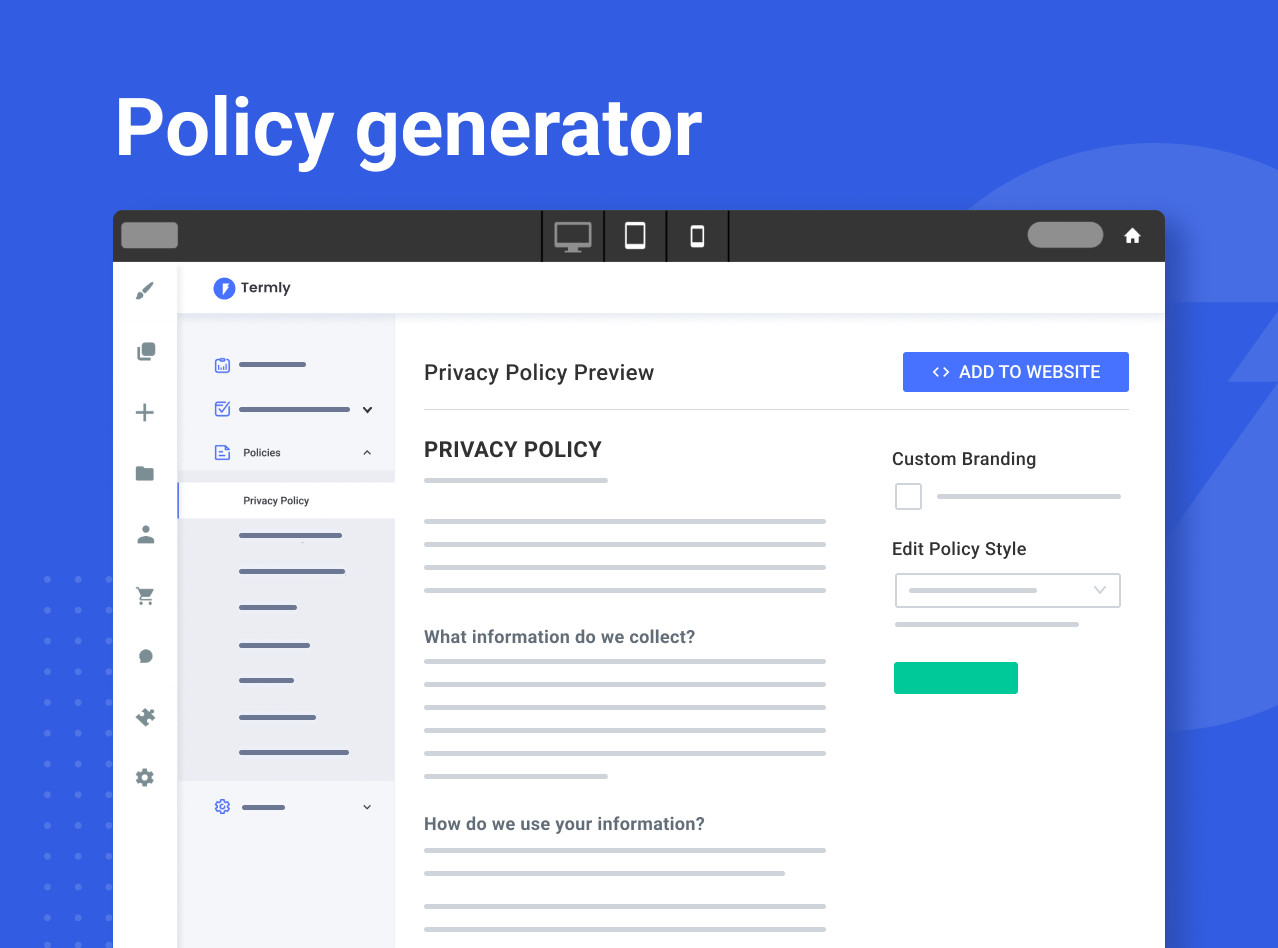
Instead of writing lengthy legal documents yourself, Termly allows website owners to generate customized policies by answering questions about their business and website.
As websites evolve, owners can revisit and update their policies when needed, helping keep documentation aligned with their current practices.
This approach can save significant time compared to creating legal documents manually.
Many travel bloggers focus primarily on writing destination guides, hotel reviews, travel tips, and itineraries. However, behind the scenes, numerous website technologies may collect visitor information automatically.
For example, a travel website might use:
Google Analytics
Email newsletter software
Affiliate marketing platforms
Advertising networks
Social sharing plugins
Embedded YouTube videos
Google Maps
Booking widgets
Live chat software
Each service can involve cookies or other technologies that process user information.
Even something as simple as allowing visitors to leave comments or submit a travel inquiry means personal information may be collected.
Without clear disclosures explaining these practices, visitors may not understand what data is being collected or why.
Privacy compliance isn’t only about meeting legal obligations—it also helps create transparency and trust between websites and their audiences.

One of the unique aspects of travel websites is their global audience.
Unlike local businesses that mainly serve customers within one country, travel websites often receive visitors from dozens or even hundreds of countries every month.
A single article about:
Bali
Italy
Japan
Thailand
New Zealand
Iceland
can attract readers from North America, Europe, Asia, Oceania, South America, and beyond.
Because travel content naturally crosses international borders, website owners should recognize that visitors may come from regions with different privacy laws and expectations.
While every website’s compliance obligations depend on its specific circumstances, maintaining transparent privacy notices and cookie disclosures is considered a good practice for websites serving international audiences.
This is one reason many travel businesses choose privacy compliance platforms like Termly instead of attempting to manage policies manually.
Trust is everything in the travel industry.
Visitors rely on travel websites when making decisions about:
Hotels
Flights
Rental cars
Travel insurance
Tours
Visa information
Travel gear
Destination planning
If users feel uncertain about how their personal information is handled, that trust can quickly disappear.
Simple elements such as:
An accessible Privacy Policy
Cookie preferences
Clear legal pages
Transparent data collection explanations
can demonstrate professionalism.
Visitors appreciate knowing:
What information is collected
Why it’s collected
Whether cookies are used
How they can manage their preferences
These details help create a more transparent browsing experience.
Using Termly allows website owners to organize these disclosures in one place rather than writing complex legal language themselves.
Cookies help websites remember user preferences, measure traffic, personalize experiences, and support advertising.
Many travel websites rely on cookies because they use services such as:
Website analytics
Affiliate tracking
Booking engines
Advertising platforms
Embedded media
Marketing tools
However, visitors increasingly expect to know when cookies are used.
Termly provides a Cookie Consent Manager that website owners can add to their sites to help present cookie consent notices and allow visitors to manage cookie preferences.
For websites that use cookies, having an organized consent solution can simplify visitor interactions while supporting transparency.
Instead of creating cookie banners manually, website owners can manage this process through a dedicated platform.
Affiliate marketing is one of the largest income sources for travel bloggers.
Many websites recommend:
Hotels
Rental cars
Luggage
Travel insurance
eSIM providers
Flights
Tours
Travel credit cards
Outdoor gear
Affiliate programs often involve tracking technologies that help attribute referrals.
While affiliate tracking itself varies between programs, website owners should understand how their chosen tools interact with visitor data and ensure their policies accurately describe these practices.
Using a privacy compliance solution like Termly makes it easier to maintain documentation explaining how a website uses cookies and third-party services.
For affiliate marketers managing dozens of partners, keeping legal pages organized can otherwise become time-consuming.
Travel websites rarely stay the same.
A new blog may begin with only a few articles.
Over time, owners often add:
Newsletter subscriptions
Affiliate partnerships
Advertising
Online stores
Digital travel guides
Booking integrations
Membership areas
Community forums
Every new feature may introduce additional data collection.
Updating legal policies manually every time your website changes can quickly become overwhelming.
Termly provides tools that allow website owners to revisit and update their legal documents as their websites evolve.
This makes it easier to keep website policies aligned with the services currently being offered.

One of the biggest challenges for small travel businesses is limited time.
Most travel bloggers would rather spend their day:
Researching destinations
Writing travel guides
Editing photos
Creating videos
Planning trips
Growing their audience
Very few enjoy drafting lengthy legal documents.
Writing a privacy policy without guidance can take hours—or even days—especially if you are unfamiliar with privacy terminology.
Termly streamlines this process by providing guided generators that help website owners create commonly needed legal policies based on information about their website and business.
Instead of starting with a blank page, users are guided through a structured process that helps produce professional-looking legal documents more efficiently.
Visitors often judge a website within seconds.
A travel website that includes:
Clearly accessible legal pages
Privacy information
Cookie preferences
Terms and Conditions
Professional disclosures
can leave a stronger impression than one missing these elements.
While great travel content remains the heart of any successful website, demonstrating transparency about privacy practices also contributes to a more professional user experience.
Rather than treating privacy as an afterthought, many website owners now include compliance tools as part of their website’s overall quality and credibility.
Using a platform like Termly can help simplify this aspect of website management while allowing travel creators to focus on producing engaging travel content.
Privacy compliance can seem overwhelming, especially for travel website owners who are not legal professionals. Understanding what disclosures are needed, how to explain data collection practices, and how to present cookie consent can quickly become complicated as a website grows.
Termly is designed to simplify these tasks by providing tools that guide users through the process. Instead of manually creating lengthy legal documents, website owners answer questions about their website and the services they use. Based on those responses, Termly generates documents that can be customized further if needed.
This guided approach is particularly useful for travel bloggers and small businesses that want to spend more time creating content and less time worrying about legal documentation.
For many website owners, having a centralized platform for privacy-related tools is far more manageable than maintaining multiple documents manually.
Travel is built on trust.
Before booking a hotel, purchasing travel insurance, or clicking an affiliate recommendation, visitors often evaluate whether they feel comfortable using a website.
Professional travel websites typically include:
Contact information
Editorial guidelines
Disclosure pages
Privacy policies
Cookie notices
Terms and Conditions
These pages show visitors that the website values transparency.
While excellent travel advice attracts readers, trust is what encourages them to return, subscribe to newsletters, or make purchases through affiliate links.
Clear privacy information helps answer important visitor questions, including:
What information is collected?
Why is it collected?
Who may receive the information?
Can visitors control cookies?
How can users contact the website regarding privacy?
Providing these answers helps create a better overall user experience.
Modern travel websites rarely operate with just a simple blogging platform.
A single website may include services such as:
Website analytics
Advertising networks
Affiliate tracking
Email marketing software
Customer support tools
Embedded videos
Maps
Booking engines
Payment processors
Social media plugins
Each service may have its own role in collecting or processing visitor information.
As your website expands, keeping track of these integrations becomes increasingly important.
Termly’s policy generators help website owners create documentation that reflects how their website operates, making it easier to explain these services to visitors.
Many website owners assume that adding a simple cookie banner is enough.
In reality, cookie consent management involves more than displaying a notification.
Visitors increasingly expect to understand:
Which cookies are being used
Why they are used
Whether they can adjust their preferences
How to change consent choices later
Termly offers a Cookie Consent Manager that allows websites to present consent notices and provide visitors with options to manage cookie preferences.
For travel websites using analytics, advertising tools, or affiliate technologies, this can help create a more transparent browsing experience.
Rather than building and maintaining cookie management systems manually, website owners can use a dedicated solution designed specifically for this purpose.
A new travel blog might only publish destination articles.
A year later, that same website may include:
Email newsletters
Premium travel guides
Digital downloads
Hotel booking partnerships
Sponsored content
Affiliate reviews
Online travel planning tools
User accounts
As websites expand, so do their privacy considerations.
Managing privacy documentation manually becomes increasingly difficult.
One advantage of using a platform like Termly is that website owners can revisit their legal policies when their websites change.
Instead of rewriting everything from scratch, they can update information to better reflect new services and features.
This flexibility is valuable for growing travel businesses that continuously add new functionality.
Creating travel content already requires significant effort.
Travel bloggers spend countless hours:
Researching destinations
Comparing hotels
Editing photographs
Producing videos
Testing travel products
Updating old articles
Improving SEO
Managing partnerships
Adding legal research on top of these responsibilities can feel overwhelming.
Termly helps reduce that workload by offering tools that simplify the creation of legal policies.
Rather than searching through legal terminology or trying to understand privacy regulations independently, website owners can use guided tools that organize much of the process.
This allows creators to spend more time producing helpful travel content.

Successful travel websites are rarely built overnight.
Many of the most respected travel brands have earned their reputation by consistently delivering valuable content while maintaining transparent business practices.
Privacy is becoming part of that reputation.
Visitors appreciate websites that clearly explain:
Data collection practices
Cookie usage
Contact information
Legal disclosures
User choices
Transparency doesn’t just help with compliance—it also demonstrates professionalism.
A visitor who understands how a website operates is often more comfortable exploring additional pages, subscribing to newsletters, or returning for future travel planning.
Travel websites commonly need several legal documents, depending on how they operate.
Termly offers generators for multiple types of legal policies, including:
Privacy Policy
Cookie Policy
Terms and Conditions
Disclaimer
End User License Agreement (EULA)
Acceptable Use Policy
Refund Policy (for applicable businesses)
Not every travel website will require every document.
For example:
A personal travel blog may primarily need a Privacy Policy, Cookie Policy, and Disclaimer.
A travel business selling digital products may also benefit from Terms and Conditions and Refund Policies.
Having these resources available within one platform simplifies website management.
Affiliate marketing plays a significant role in the travel industry.
Travel creators frequently recommend:
Hotels
Flights
Rental cars
Luggage
Travel insurance
eSIM providers
Tour companies
Airport transfers
Travel accessories
These recommendations often include affiliate links.
Many travel websites also display affiliate disclosure statements explaining that commissions may be earned from qualifying purchases.
Privacy policies complement these disclosures by explaining how website technologies such as cookies or analytics may operate alongside affiliate partnerships.
Keeping these explanations organized contributes to a more transparent website.
Unlike many niche websites, travel platforms naturally attract readers from around the world.
Someone researching:
Backpacking in Thailand
Road trips across New Zealand
Ski holidays in Switzerland
Safari tours in Kenya
Beaches in Australia
could be browsing from almost any country.
International audiences increasingly expect websites to provide accessible privacy information.
Easy-to-find legal pages and cookie preferences help visitors understand how the website operates before they continue browsing.
By making privacy information readily available, travel websites create a more welcoming experience for global audiences.
When launching a new travel website, owners often focus on:
Choosing a domain
Designing pages
Publishing articles
Improving SEO
Setting up analytics
Joining affiliate programs
Privacy compliance is sometimes overlooked until much later.
However, including privacy considerations early can make website management easier over time.
A practical launch checklist might include:
Creating a Privacy Policy
Adding a Cookie Policy
Publishing Terms and Conditions where appropriate
Installing a cookie consent solution
Reviewing data collection practices
Updating legal pages whenever new features are introduced
Using a platform such as Termly can help organize these tasks from the beginning rather than trying to address them after a website has grown significantly.
Some bloggers believe privacy compliance is only necessary for large companies with millions of visitors.
In reality, even smaller websites often use services that involve data collection.
Whether your travel blog receives:
500 visitors per month,
5,000 visitors,
or hundreds of thousands,
being transparent about your website’s practices helps create a better experience for readers.
As your audience grows, having privacy documentation already in place saves time and reduces the need for major changes later.
Building good habits early is often easier than trying to reorganize legal documentation after years of website growth.

Privacy expectations are likely to continue evolving as technology changes and online services become more interconnected.
Travel websites are also becoming more sophisticated, offering personalized recommendations, interactive planning tools, membership features, and enhanced booking experiences.
As websites introduce new technologies, maintaining clear communication about privacy practices will remain an important part of responsible website management.
Rather than viewing privacy compliance as a one-time task, successful travel businesses increasingly treat it as an ongoing process.
Using dedicated tools like Termly can help website owners manage that process more efficiently while continuing to focus on creating exceptional travel content.
Even experienced travel bloggers can unintentionally overlook important privacy-related practices. As websites grow, new tools and integrations are often added without updating legal pages or reviewing how visitor data is handled.
Some common mistakes include:
Publishing a generic Privacy Policy that doesn’t accurately reflect the website.
Forgetting to update policies after adding new plugins or services.
Using analytics and advertising tools without informing visitors.
Hiding legal pages where users cannot easily find them.
Assuming privacy compliance only matters for large businesses.
Never reviewing policies after significant website changes.
Avoiding these mistakes helps create a more transparent experience for visitors. A solution like Termly makes it easier to keep legal documents organized and revisit them whenever your website evolves.
Getting started with privacy compliance doesn’t have to be complicated. Many travel bloggers already spend time improving website speed, optimizing SEO, and enhancing user experience. Privacy should become another part of that routine.
A typical implementation process may include:
Identifying what information your website collects.
Reviewing the third-party services you use.
Generating the legal policies your website needs.
Publishing those policies on accessible pages.
Adding a cookie consent solution if your website uses cookies.
Reviewing your policies whenever you introduce new tools or features.
Because every website is different, it’s important to ensure your policies accurately reflect your own practices rather than copying text from another website.
One mistake that still happens surprisingly often is copying legal pages from another website.
While it may seem like a shortcut, this approach creates several problems.
Every website differs in terms of:
Data collection methods
Analytics platforms
Advertising networks
Affiliate programs
Newsletter providers
Payment systems
User account features
A Privacy Policy should describe your own website—not someone else’s.
Using a policy generator like those offered by Termly helps create documentation based on the information you provide about your website, making it much more relevant than copying generic legal text.

When website owners think about user experience, they often focus on page speed, mobile responsiveness, and navigation.
Privacy transparency also contributes to a positive experience.
Visitors appreciate websites that:
Clearly explain their privacy practices.
Make legal information easy to locate.
Offer understandable cookie choices.
Avoid confusing legal language where possible.
When users feel informed, they are more likely to continue exploring your content with confidence.
For travel websites that depend on returning readers and long-term audience relationships, trust is an important asset.
Travel websites come in many forms.
Some are personal travel journals.
Others focus on:
Destination guides
Hotel reviews
Flight comparisons
Digital nomad resources
Family travel
Adventure travel
Luxury vacations
Budget backpacking
Cruise planning
Despite these differences, many share similar privacy needs.
Termly offers a collection of tools that can help website owners manage legal policies and cookie consent without requiring extensive legal knowledge.
Instead of spending hours researching legal terminology, travel creators can use guided tools that simplify much of the process.
This practical approach is one reason many businesses across different industries choose privacy compliance platforms.
No. Termly is used by businesses of different sizes, including small businesses, startups, bloggers, freelancers, and growing websites. Travel bloggers who want to organize their privacy documentation may also find its tools useful.
Yes.
Many travel blogs still collect visitor information through:
Contact forms
Newsletter subscriptions
Analytics services
Comment sections
Cookies
Embedded content
Being transparent about these practices helps visitors understand how the website operates.
Not necessarily.
However, many websites use cookies because they rely on services such as analytics platforms, advertising networks, embedded media, or affiliate tracking technologies.
Website owners should understand which technologies they use and provide appropriate disclosures where applicable.
Yes.
Privacy regulations, technologies, and website features continue to evolve.
Reviewing legal policies periodically helps ensure they remain aligned with your current website practices.
Many website owners prefer dedicated platforms because they simplify the process of generating legal documents and managing cookie consent.
Rather than starting from a blank page, users are guided through structured questions that help create documentation tailored to their website.
Running a successful travel website involves much more than publishing beautiful destination guides or sharing travel experiences.
Modern travel websites often rely on analytics tools, affiliate partnerships, advertising platforms, newsletter providers, and various third-party services that may process visitor information. As online privacy expectations continue to grow, being transparent about these practices has become an important part of operating a professional website.
Privacy compliance should not be viewed as a one-time task completed during a website launch. Instead, it should evolve alongside your website as you introduce new features, partnerships, and technologies.

This is where Termly provides meaningful value.
By offering tools such as Privacy Policy generators, Cookie Policy generators, Terms and Conditions generators, and a Cookie Consent Manager, Termly helps website owners organize essential privacy documentation in one place. Its guided approach makes privacy compliance more approachable for bloggers, entrepreneurs, and businesses that may not have legal expertise.
For travel website owners, using a dedicated privacy compliance platform can save valuable time while helping create a more transparent browsing experience for visitors. Instead of manually drafting and maintaining multiple legal documents, you can focus on what matters most—creating inspiring travel content, growing your audience, and building lasting relationships with readers.
Whether you’re launching your very first travel blog or managing an established travel resource with visitors from around the world, prioritizing privacy demonstrates professionalism and respect for your audience. As expectations around online transparency continue to evolve, investing in reliable privacy compliance tools is a smart step toward building a trustworthy and sustainable travel website.
If your goal is to create a travel website that not only informs and inspires but also values visitor transparency, Termly is worth considering as part of your website management toolkit.